

How do you get rid of acne?


Posted: · Updated:
In short: what helps against acne?
Start with the root cause: your skin barrier
With many skin problems, acne included, a disrupted skin barrier plays a role. So start with a short, gentle routine: cleanse with lukewarm water and a mild cleanser, leave spots alone, use non-comedogenic products and protect your skin from the sun. Give your skin a few weeks.
What we recommend
Cleanse gently with the Carrot Cleanser, dab a spot locally with the Cucumber Serum and use our SPF30 with zinc oxide as a light day cream. Once or twice a week, you can add the Apple Peeling.
What is acne and what causes it?
Almost everyone has to deal with it to some degree: acne or spots. Some people only get it in their teens or during stressful times, for example. Others get it later in life (like our founder Angela, who had acne until she was 45). It's absolutely nothing to be ashamed of; almost everyone knows the problem.
Acne develops when the sebaceous glands in your skin start producing more sebum and become clogged with sebum, dead skin cells and bacteria. This is how blackheads and whiteheads form. If a clogged gland becomes inflamed, a spot turns red or gets a yellow head. Hormones play a big role, and acne is partly hereditary. Some medicines can also make acne worse.
Where acne comes from exactly differs from person to person. That's also why the same thing doesn't work for everyone. Below you can read what you can do yourself, when treatment is needed and how the two go together.
“It’s absolutely nothing to be ashamed of; almost everyone knows the problem.”
Our view: start with the root cause
We see that strong products are often used quickly for acne. They can work well in the short term, but they are also tough on your skin. Thuisarts itself mentions side effects such as dry, flaky and burning skin, and antibiotics should not be used for longer than 3 months. Benzoyl peroxide is not exactly gentle either. And once you stop, the spots can come back.
That is why at Food for Skin we believe in gentleness, and in tackling the root cause instead of just the spot. With many skin problems, acne included, a disrupted skin barrier plays a role. If it is damaged, for example by using too many or too harsh products, your skin becomes irritated and unbalanced more easily. So first see whether it helps to get your skin barrier healthy again: keep your routine short and gentle, and give your skin a few weeks. In Restoring your skin barrier you can read how to approach this step by step.
Only use strong products when needed, preferably for as short a time as possible and in consultation with your GP. If you do use strong products, support your skin with gentle care that does not dry it out further. And don't just stop a prescribed treatment: talk to your GP first.
Looking for a gentler, natural option? Tea tree oil is the best-researched natural ingredient for spots: in small studies, a gel with 5% tea tree oil reduced spots, although it works more slowly than benzoyl peroxide. Always use it diluted, because undiluted it can irritate and some people are allergic to it. Thyme and manuka honey are also often mentioned. The effect of thyme has mainly been studied in the lab, and honey has soothing properties for the skin.
Caring for acne-prone skin: what you can do yourself
Cleanse gently
Wash your face once or twice a day with lukewarm water and a mild cleanser, preferably a non-foaming one, and then gently pat your skin dry. Rubbing, scrubbing and frequent washing irritate your skin. Your natural skin barrier has a protective function. You don't want to scrub it away: harsh, strongly degreasing cleansers can damage it, making your skin more sensitive.
Leave spots alone
Please try not to squeeze or pick. This often makes the inflammation worse and can leave scars. Let blemishes and small wounds heal in the open air.
Choose skincare that doesn't clog your pores
The Dutch GP information site Thuisarts, among others, recommends oil-free creams and make-up for acne, because oil can make your skin oilier. We see it in a more nuanced way: not every oil works the same. The American Academy of Dermatology (AAD) also mainly recommends products that are non-comedogenic, meaning they don't clog your pores. Light, non-comedogenic oils can therefore suit acne-prone skin perfectly well. That is why we deliberately choose cold-pressed, non-comedogenic oils. For acne-prone skin, we especially recommend the Cucumber Serum: it contains light oils such as cucumber seed, rice bran and oat oil. Read more in Oil products for oily skin. Avoid or not? If you notice after a few weeks that your skin is getting oilier or that you're getting more spots, choose an oil-free product.
Keep your routine short
It's tempting to believe that an extensive range of products is the key to beautiful skin, but often the opposite is true. Dermatologists increasingly warn that too many products, and especially too many active ingredients at once, can overload your skin. Your skin then becomes irritated and your skin barrier can be disrupted, which can actually make spots worse. That's why we believe in a short routine that supports your skin instead of taking over everything. Strong skin is better able to keep itself in balance.
Protect your skin from the sun
Spending lots of time in the sun or using a sunbed doesn't help against acne. So protect your skin well, also because spots are more likely to leave dark marks in the sun. Preferably choose a mineral sunscreen based on zinc oxide, such as our Caring Sun Protection SPF30. It is light enough to use as a day cream.
Natural skincare for acne: which products suit?
At Food for Skin, we focus on the core: a strong, healthy skin barrier and skin that can regulate itself well. Our products are skincare, not a medical treatment. For a gentle routine for acne-prone skin, we recommend:
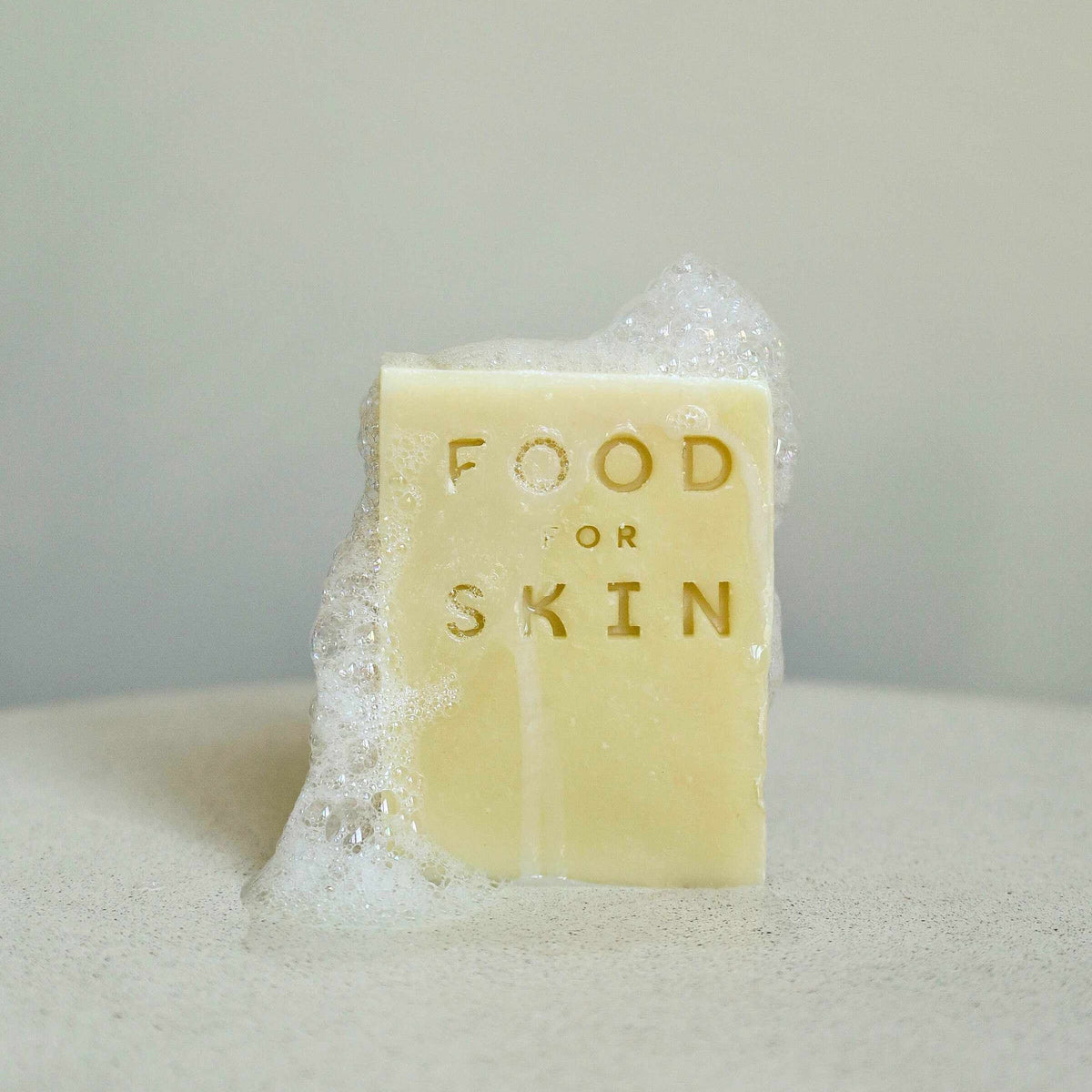
Gentle cleansing is the basis: the Carrot Cleanser is a mild, non-foaming oil cleanser that removes make-up, SPF and dirt without drying out your skin.
Exfoliate once or twice a week: add the Apple Peeling, a mild exfoliant, in the evening.
Dab locally: the Cucumber Serum is a light serum with non-comedogenic oils. You can use it to dab a spot locally.
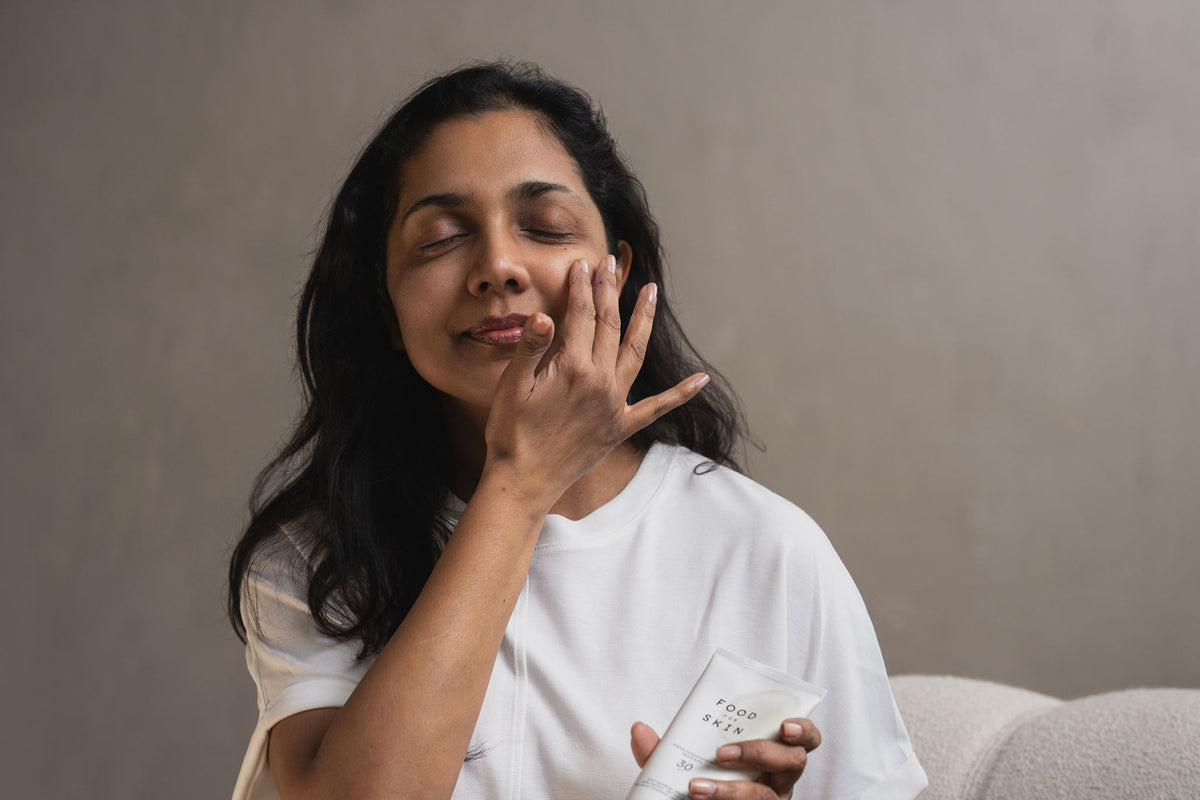
As a day cream: our Caring Sun Protection SPF30 based on non-nano zinc oxide. Zinc oxide dries the skin slightly and has a light mattifying effect, which can be pleasant for oilier, acne-prone skin. That makes it well worth trying. It also works as light daily care and protects your skin from the sun, so spots are less likely to leave dark marks.
Does your skin need more? Then you can add the Tomato Base Cream, but you don't have to.
Many customers with spots tell us that their skin becomes calmer. If you're just starting out, give your skin a few weeks to get used to it: your skin renews itself roughly every 3 to 4 weeks.
Mild and natural


Preventing acne: lifestyle tips
Diet and acne
What do you eat and drink? Thuisarts says there is no good research on food and acne. The AAD does mention a possible link: food that makes your blood sugar rise quickly, such as white bread, chips and lots of sugar, can make acne worse, and drinking milk possibly does too. So keep an eye on your sugar intake, choose vegetables, healthy fats and water more often, and limit alcohol. If you notice that certain foods keep giving you spots, leave them out for a while and see what happens.
Spots on your chin and jawline
Coat collars, scarves, a phone against your ear, bedding: friction and pressure on your skin can make spots on your chin and jawline worse. Do you often get spots on your jawline? Then ask yourself when your roll-neck jumper, scarf or coat was last washed. We recommend changing your pillowcase at least once a week.
Humidity
The air around you also affects your skin, at home, at work and outdoors. Dry air can dry out your skin and make it more sensitive. A humidity of between 40 and 60 per cent is pleasant for your skin and mucous membranes; a humidifier can help with this.
Scrubbing your face when you have acne
Let's also take a moment to look at overly harsh scrubs, exfoliants and peels. Although they initially promise smooth skin, with acne they mainly cause irritation. In the long run, this can lead to pigmentation marks, dry patches or redness. So we advise against frequently scrubbing your face if you have acne. There's no harm in doing an occasional peel at home, but choose a superficial mild option or ask a beauty therapist for advice. Read more about exfoliating acids.

Occasional peel
Apple Peeling - Mild ExfoliantMild fruit acid peel of 100% natural originRemoves dead skin cells and impurities.
40,00
Bacne: spots on your back
Oh yes, let's also talk about something that's sometimes forgotten but is certainly no less annoying: bacne, or acne and spots on the back. Here are some tips:
After washing your hair, especially if you use conditioner, it's a good idea to wash your back once more with a mild soap. Conditioner can stay behind on your skin and clog your pores. So rinse well. A small effort with potentially big benefits!
Shower lukewarm rather than hot. A hot shower can affect your natural protection, leaving your skin feeling tight or stinging. If your water is very hard, a descaling shower head is no unnecessary luxury. A shower oil instead of shower gel can also be more nourishing and gentler on your skin.
Your back is a tricky place to apply products. If that doesn't help enough, discuss with your GP whether tablets are an option.
Not enough? What is proven to help against acne
Is a gentle routine not giving enough improvement after a few weeks? Thuisarts.nl (Dutch College of General Practitioners) and the American Academy of Dermatology then recommend first trying a benzoyl peroxide gel from the pharmacy, and seeing your GP or a dermatologist if that does not help enough. We ourselves would not simply reach for strong products: they are tough on your skin, as you can read in our view above. But it is good to know what the steps are. According to Thuisarts, they are:
Yourself, from the pharmacy: a gel with benzoyl peroxide, if you mainly have blackheads and few white or yellow spots. Use the gel for at least 6 weeks. At first, your skin may become drier or flaky.
Through your GP: a gel or cream with benzoyl peroxide, adapalene or tretinoin, sometimes supplemented with antibiotics as a gel or tablet.
Through a dermatologist: if the treatment from your GP doesn't help enough.
Acne medicines often only start working after 4 to 6 weeks. So don't stop too soon. Are you pregnant or trying to get pregnant? Then adapalene and tretinoin are not suitable. Read more in our guide to skincare during pregnancy.
A gentle routine combines well with treatment. That's exactly when your skin benefits from a cleanser and skincare that don't dry it out further.
When to see a GP or dermatologist?
Make an appointment with your GP if:
you have lots of spots with white or yellow heads;
your skin hasn't improved after about 5 weeks of using benzoyl peroxide gel;
you're bothered by scars or dark marks, or if it makes you feel very self-conscious.
If you have medium or dark skin, don't wait too long. Acne is then more likely to leave dark marks and scars, and good treatment reduces that risk. For severe acne, you can also ask a skin therapist or dermatologist for help.
What to do about acne? Our conclusion
Acne is very common and usually clears up on its own, although that can take years. Remember that balance is key. A simple, well-considered routine that strengthens your skin barrier can sometimes do more than an abundance of products. For acne that doesn't go away, treatment from the pharmacy or your GP is the right addition.
Keep glowing, stay beautiful, and remember that it's never wrong to ask for help when it comes to the health of your skin. Together we're working towards strong, resilient skin!


