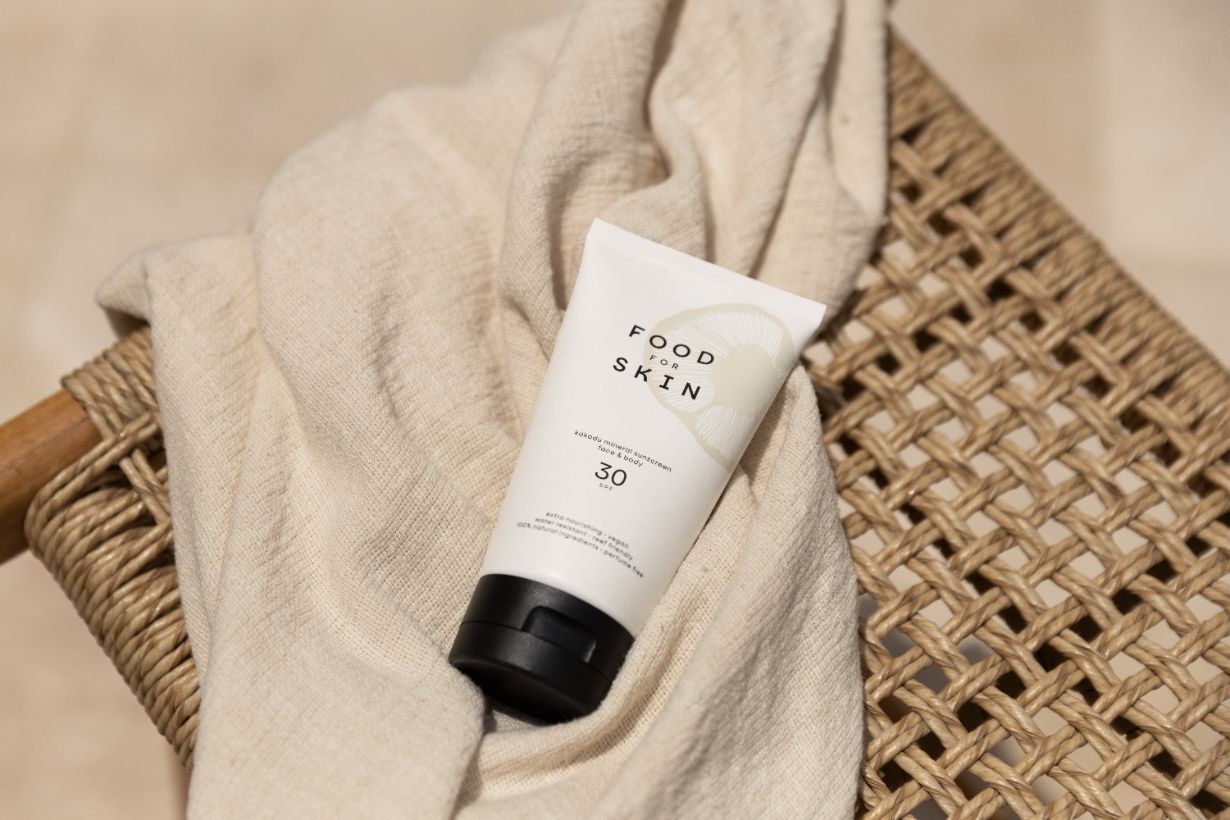
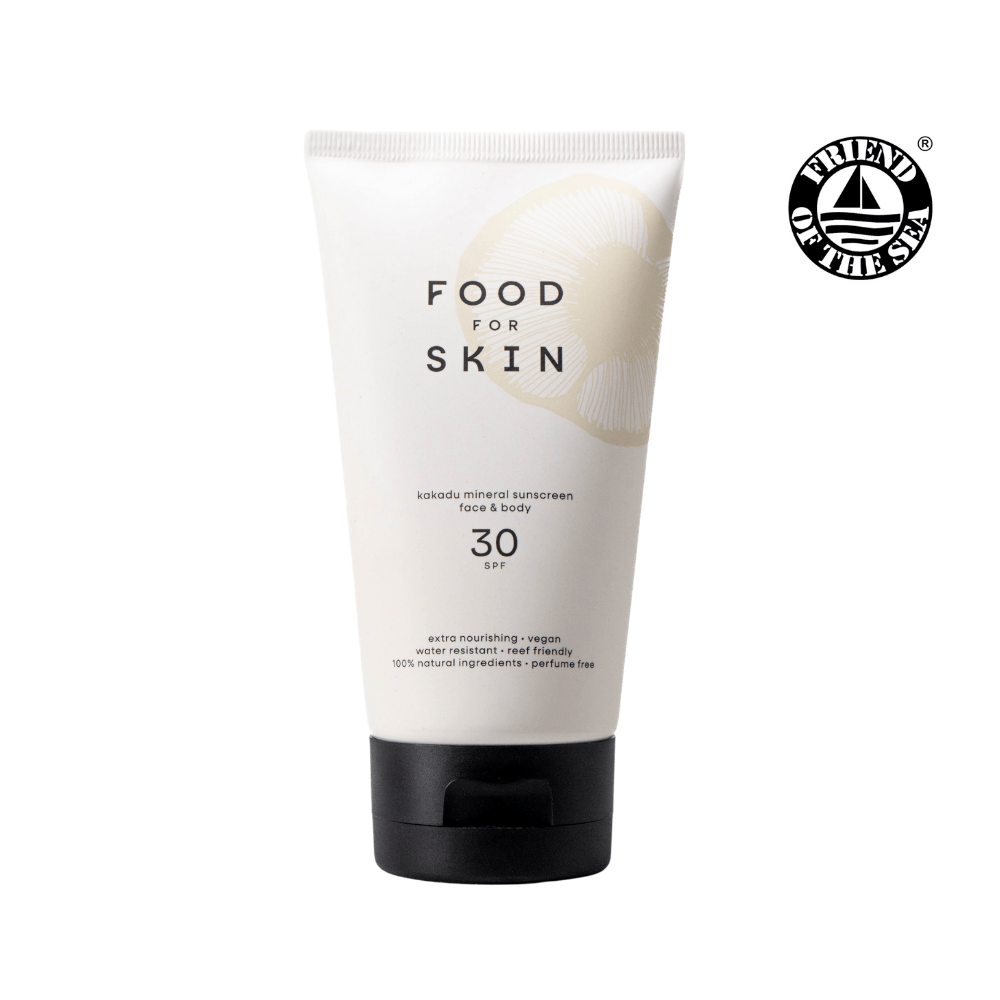
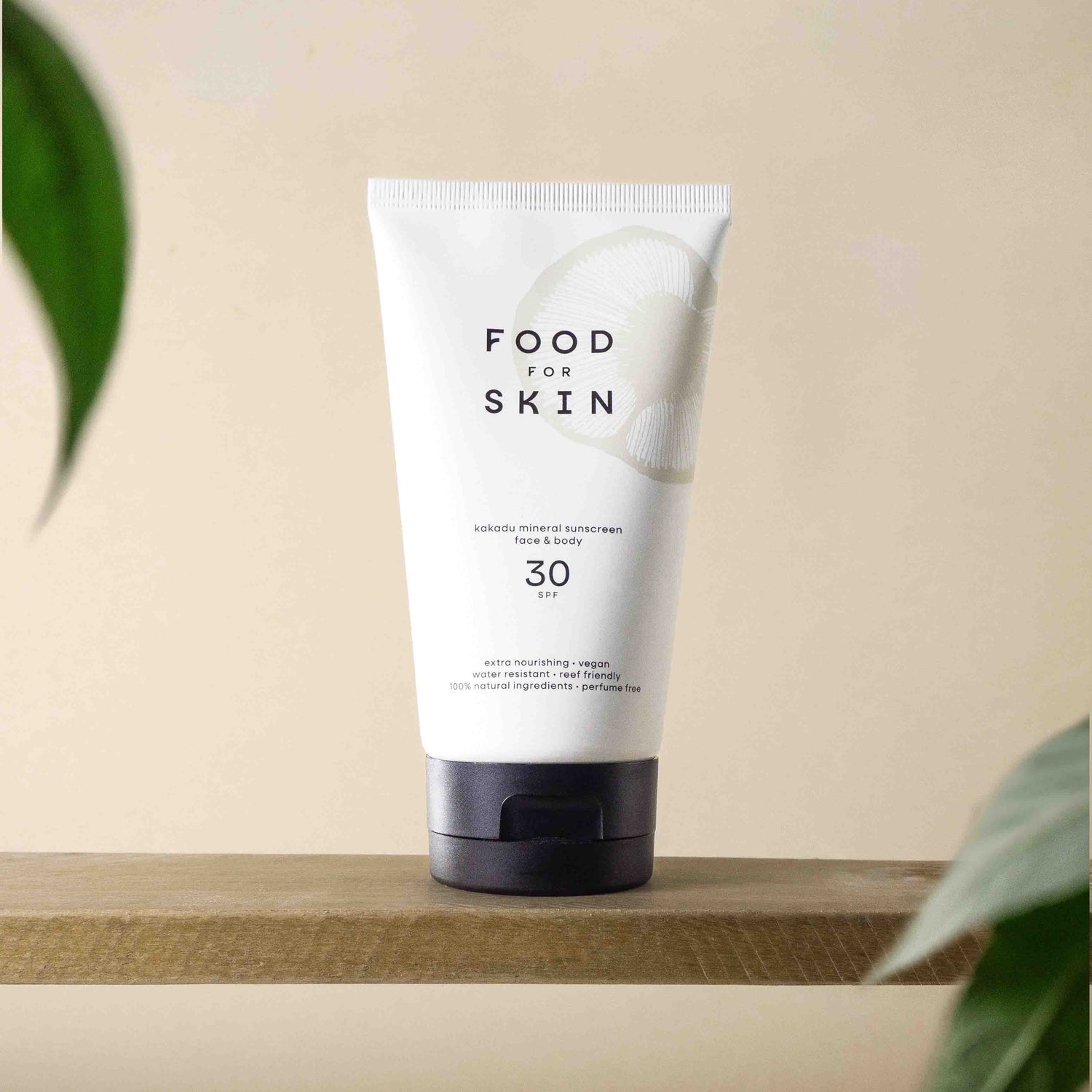
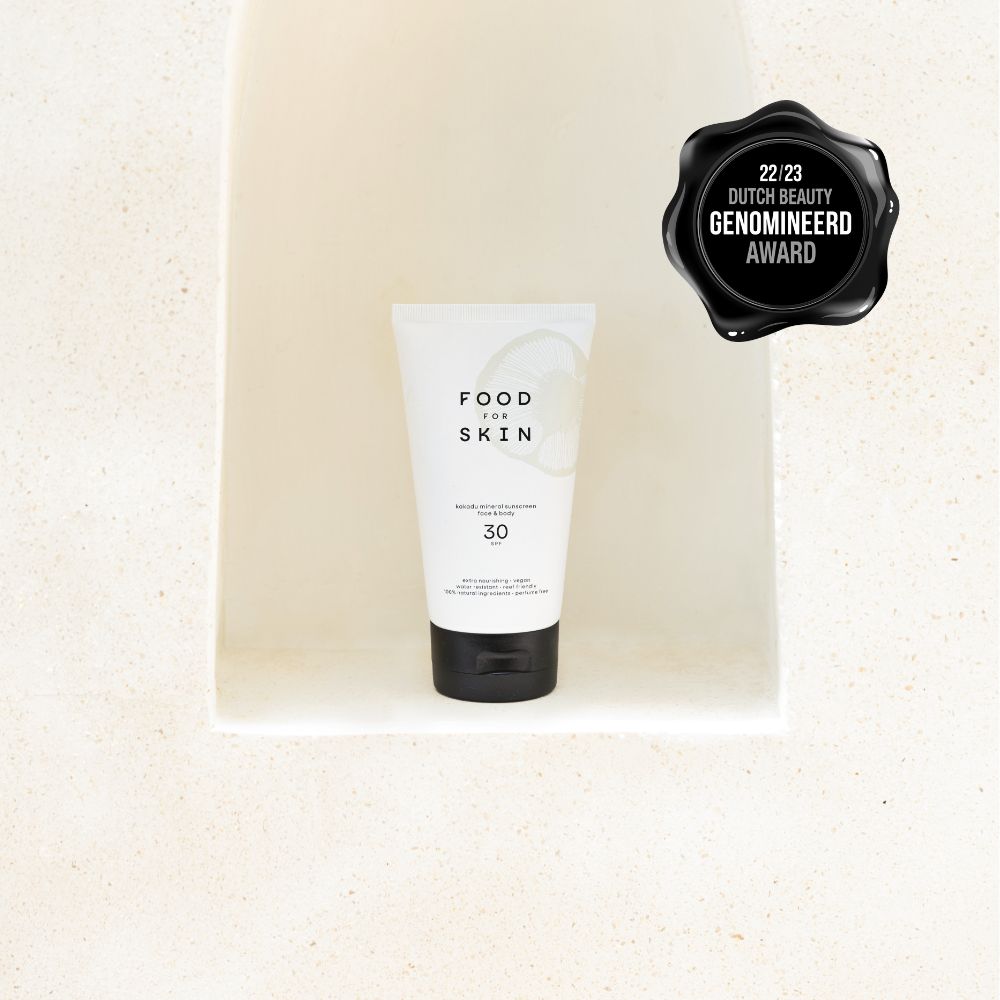
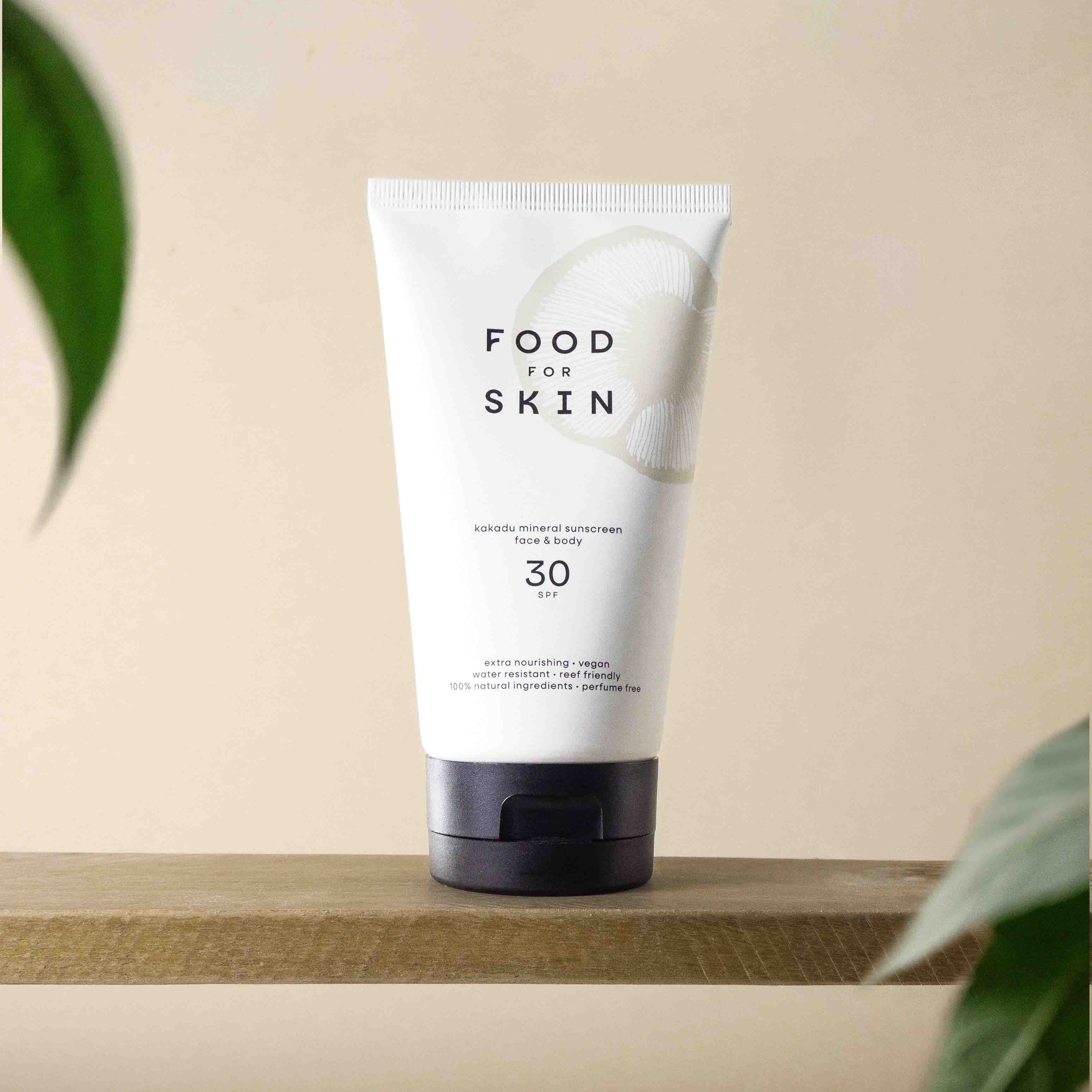
100% mineral sunscreen

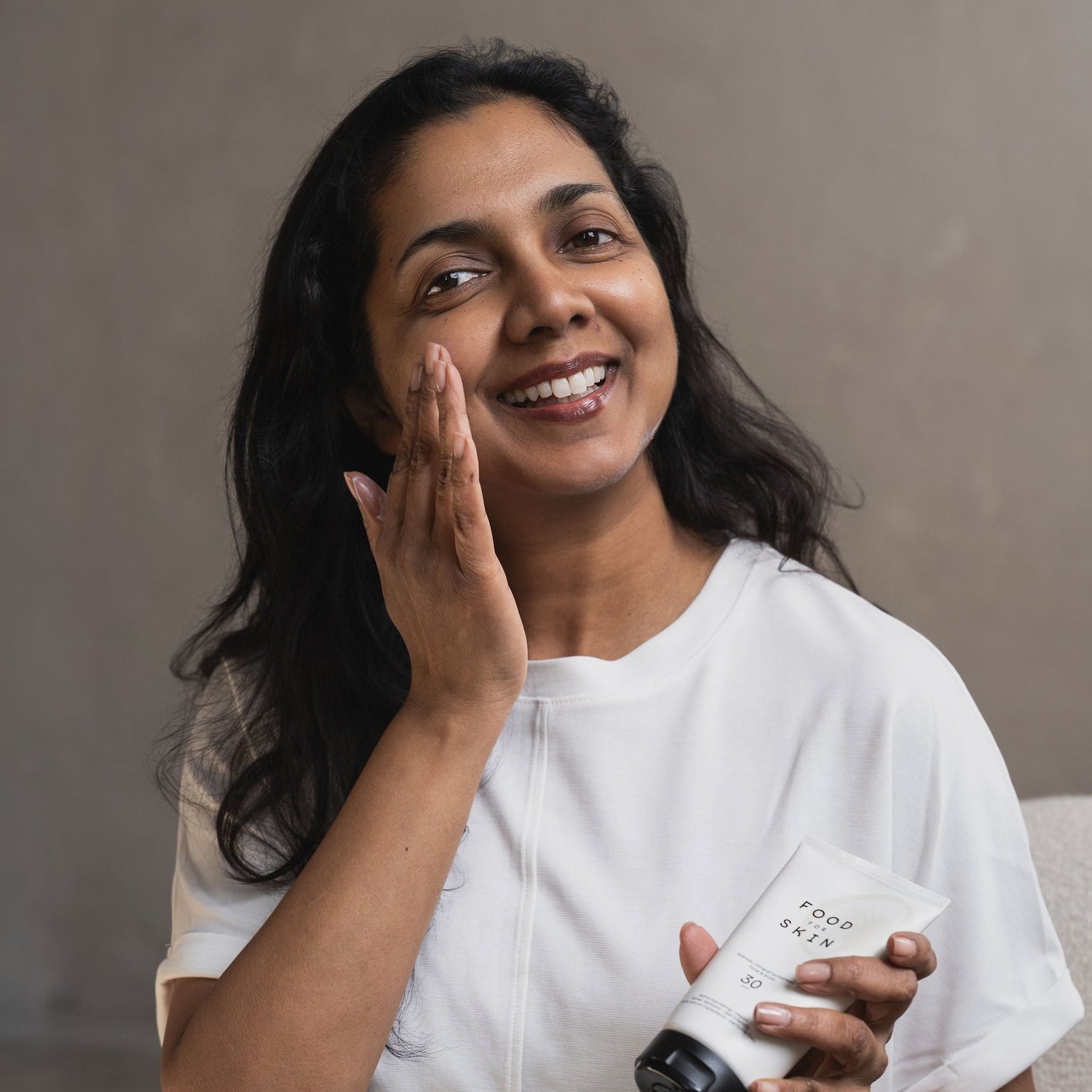
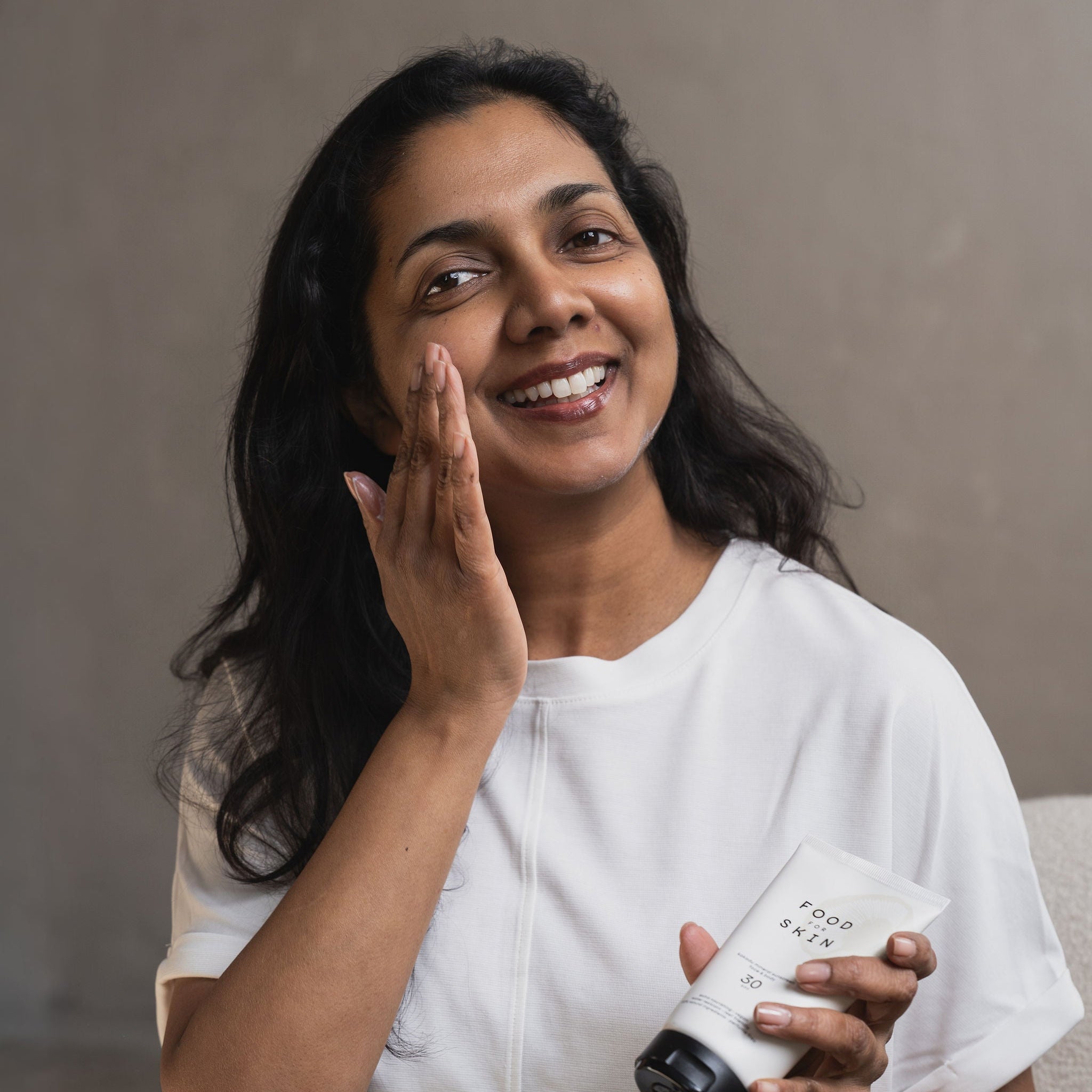
  • No white cast

  • More coral- and ocean-friendly

  • Mineral filter of non-nano uncoated zinc

  • UVA (broad spectrum) + UVB

  • 100% PCR tube

  • Highly caring thanks to a vitamin C boost

  • Three ingredients from upcycling

  • For the whole family

Sunscreen without the junk: mineral or synthetic filters?

Enjoying the sun is wonderful and can give a nice vitamin D boost! But too much can do harm. Alongside seeking shade and wearing covering clothing, sunscreen is an essential product that helps protect us from the sun when you spend longer periods in direct sunlight (note: no sunscreen protects 100%). There is plenty of choice in sunscreen, but which one is really good for you?

There are two types of sunscreen on the market: sun protection with mineral filters or with synthetic (also called chemical) filters and substances. We are not great fans of the term 'chemical' ourselves, because natural products are made using chemistry too. Chemistry simply refers to mixing, preserving, thickening or stabilising substances to make an end product. That is why the comparison natural/mineral versus synthetic/non-mineral would be more accurate.

Sunscreen with mineral filters leaves a thin layer on the skin, so that the sun is reflected and cannot penetrate your skin. Sunscreen with synthetic filters absorbs into your skin, where the UV radiation is broken down. Some synthetic filters are debated because of possible skin reactions and their effect on coral and marine life. A natural sunscreen without the junk is therefore not a needless luxury, but better for your skin and for the planet.

Which sunscreen without the junk suits you?

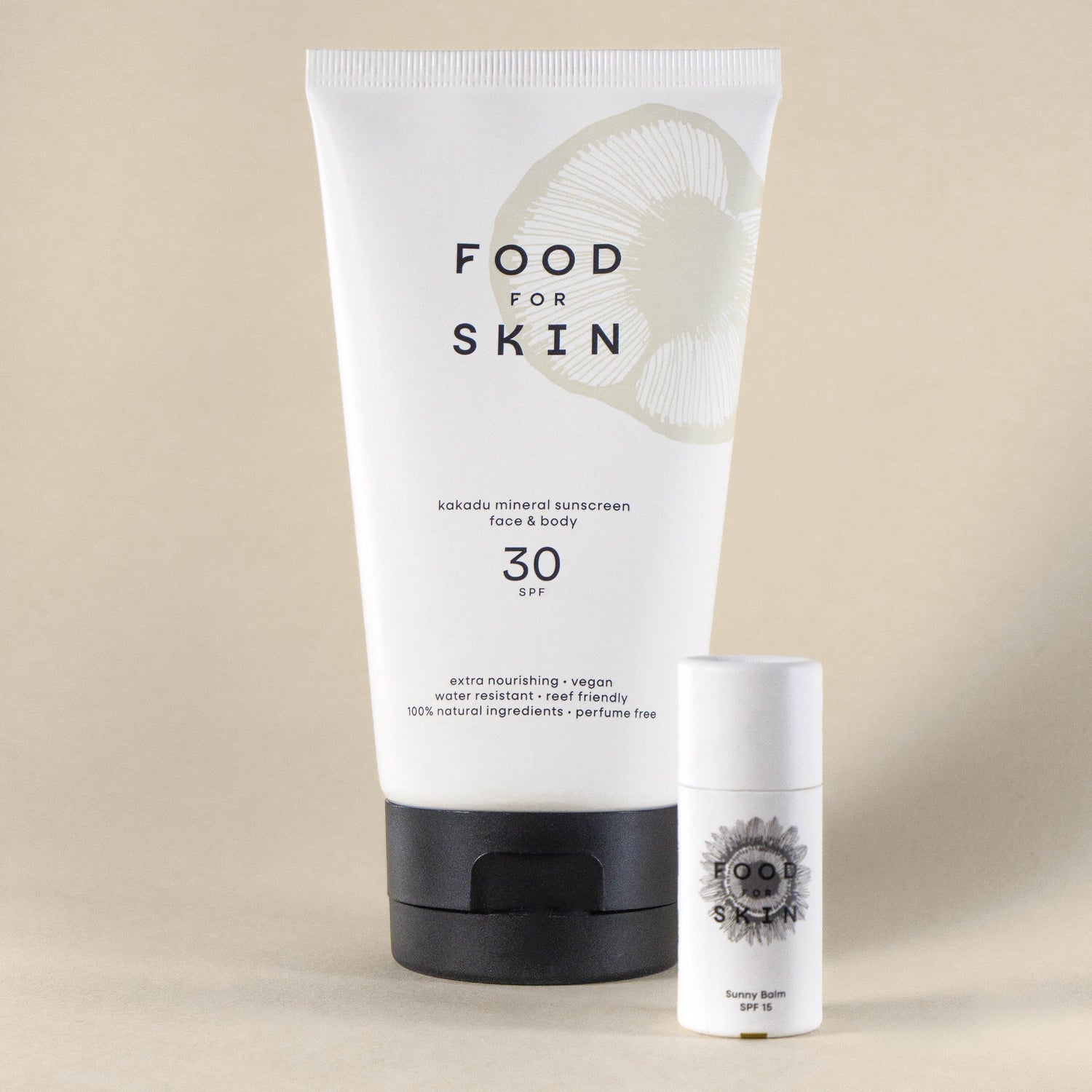
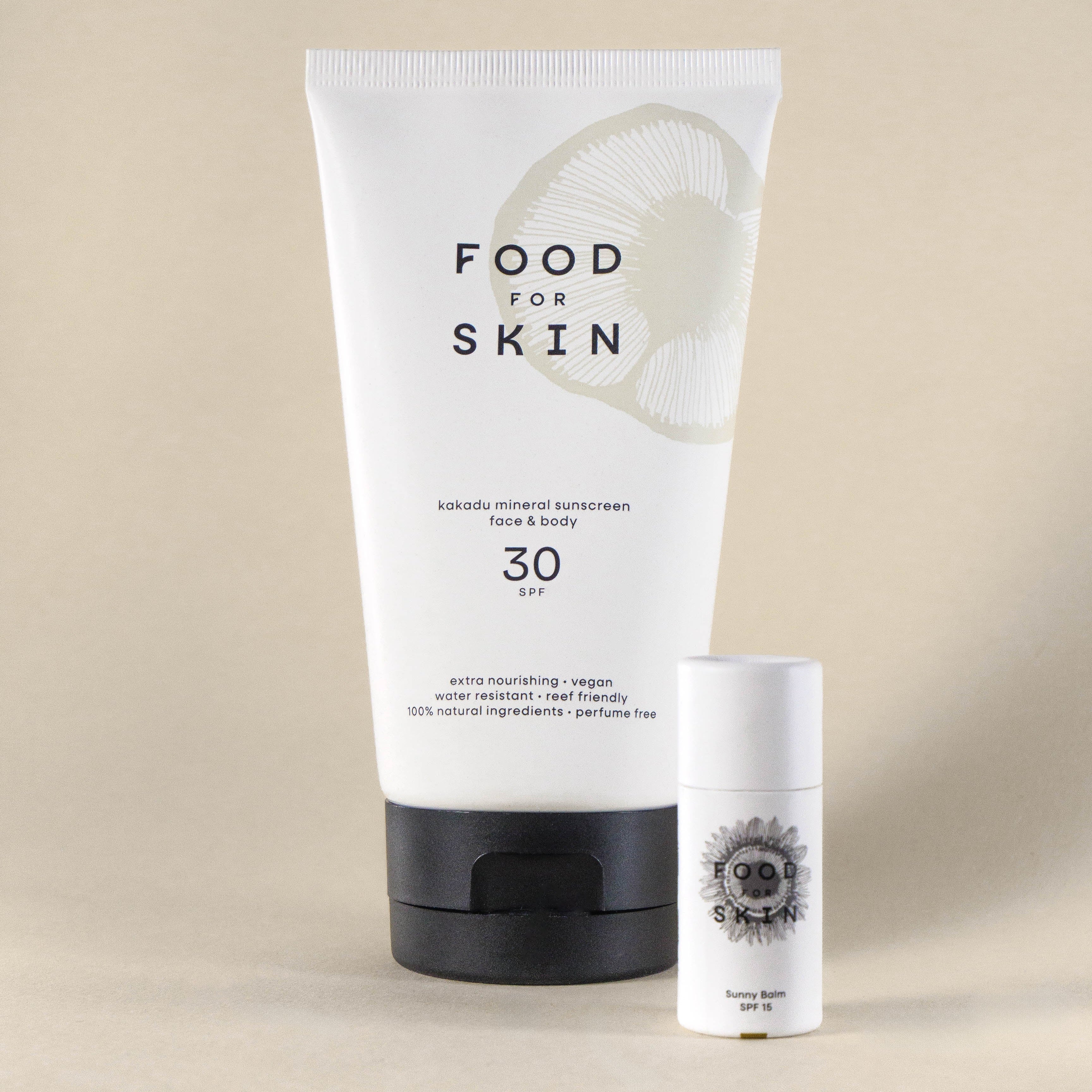
For face and body there is the natural mineral sunscreen SPF30: non-nano zinc oxide, without a white cast and without perfume, suitable for the whole family from 6 months.

Non-nano zinc and caring ingredients

Our sunscreen without synthetic substances, but with pure natural and vegan ingredients, is suitable for everyone from 6 months. This comes from the laboratory, because the advice there is not to go into the sun at all before 6 months.

Our sunscreen is made on a zinc base. It contains no nanoparticles (non-nano), so they can barely or not at all end up in your bloodstream or in coral. The zinc particles are also uncoated, which means there is no silicone layer around them. This makes the sunscreen safer and friendlier for coral and marine life.

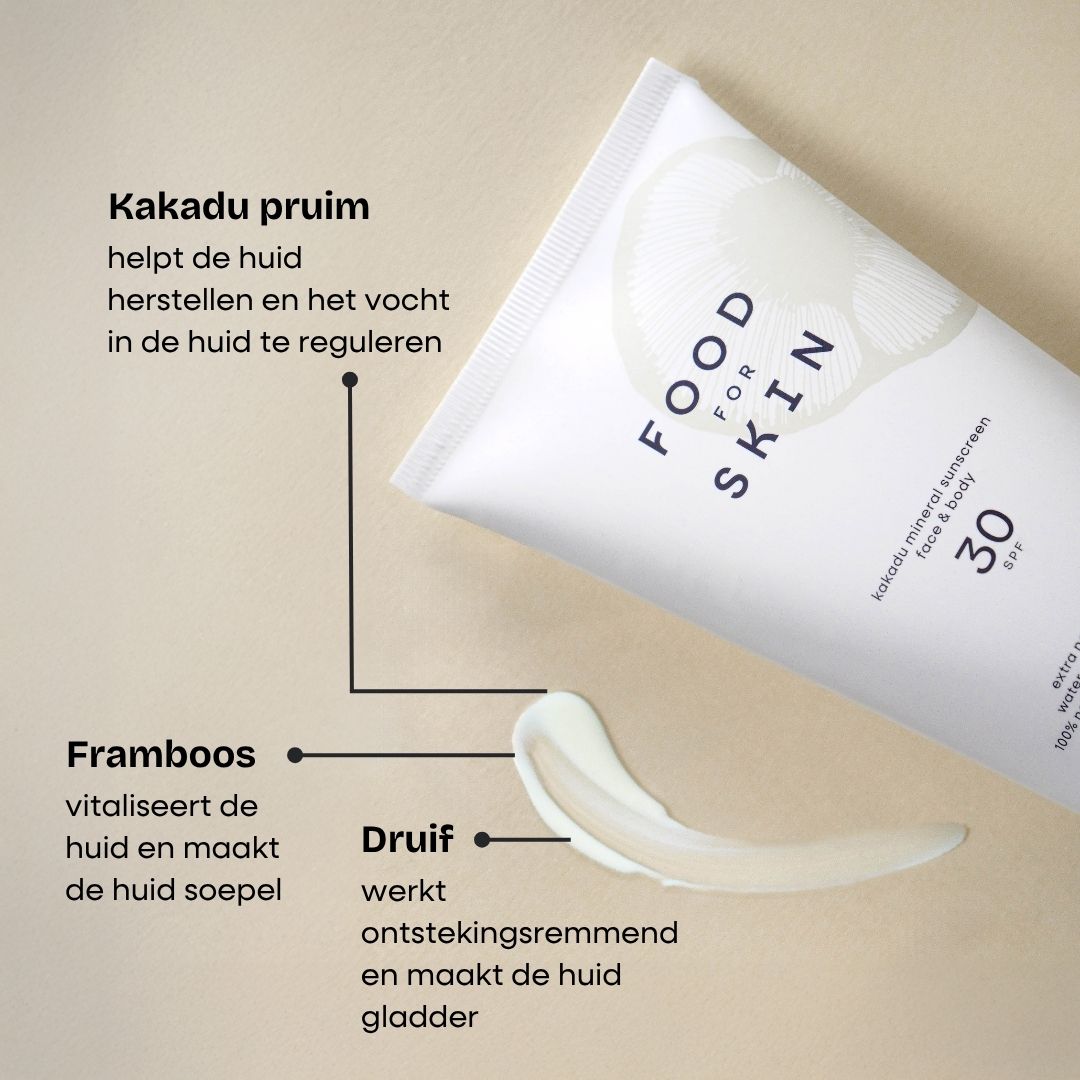
Besides using only natural and vegan ingredients, the Food for Skin sunscreen also contains various substances that keep the skin in balance: antioxidants to ward off external influences, moisturisers that help retain moisture in the skin and substances that support the skin's recovery. One of the active ingredients in the SPF is the kakadu plum. Did you know this is the fruit with the most vitamin C? So alongside protection, a real boost for your skin!

Natural sunscreen without harmful chemicals or white cast

You can use the natural sunscreen for both your face and body, and it provides UVA + UVB protection. This means the sunscreen prevents sunburn and severe skin damage, as well as skin aging!

Until a few years ago, sunscreens with mineral filters often left a white film on your skin. Through extensive research in collaboration with our laboratory, we have created an excellent formula, including blueberry seed oil, kakadu plum seed oil, and raspberry seed oil, and have developed our sunscreen so that it leaves almost no white cast, even after swimming!

Voted most sustainable Dutch sunscreen

We are so proud!!

In Just Enough's Product Guide, Food for Skin has been rated as the most sustainable Dutch sunscreen brand, with a score of 9.7. For the assessment, Just Enough investigated sustainability, animal welfare, human rights, transparency, and the production chain, among other things, following the methodology of Ethical Consumer.

Food for Skin not only achieved the highest score among Dutch brands but also scored higher than all internationally assessed sunscreen brands.

Read the study

Frequently asked questions about natural sunscreen

Which SPF do I choose: SPF 30 or higher?

SPF 30 protects only slightly less than SPF 50 and remains easy to apply without leaving a white cast! That's why we now opt for SPF30 exclusively. If you find yourself applying SPF 50 less often, you're better off choosing an SPF 30 that is pleasant to use.

How do I choose the right sunscreen for my skin type?

First, consider the factor: SPF 30 is sufficient for daily use, provided you apply enough. If you have sensitive skin, choose a fragrance-free, mineral sunscreen with non-nano zinc oxide. The same mild formula can be used for children aged 6 months and up, and for adults.

What is the best sunscreen for sensitive skin?

A sunscreen for sensitive skin preferably contains mild UV filters and as few irritating ingredients as possible. That's why many people opt for a mineral sunscreen with zinc oxide and without synthetic fragrance.

What's the difference between mineral and chemical sunscreen?

Mineral sunscreen protects with UV filters such as zinc oxide. Chemical sunscreen uses organic UV filters that absorb UV radiation. Both protect against the sun, but people with sensitive skin often prefer mineral sunscreen.

Which sunscreen doesn't sting the eyes?

Sunscreen can sting the eyes when the skin reacts sensitively to certain ingredients. Many people find a fragrance-free mineral sunscreen pleasant around the eyes.

Is natural sunscreen as effective as regular sunscreen?

Yes. The protection depends on the SPF and the UV filters used. A natural sunscreen with SPF 30 protects just as well as any other sunscreen with SPF 30 if you apply enough.