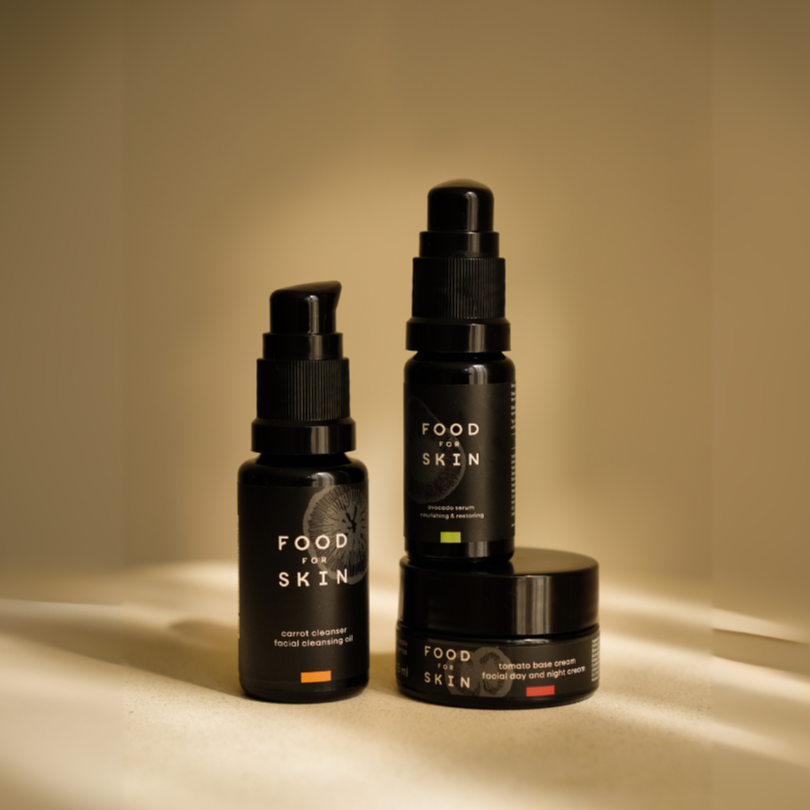

We're big fans of waterless skincare!
A day cream without water does not contain added water as its main ingredient. Instead of a formula that largely consists of aqua, you opt for a cream with nourishing ingredients that genuinely benefit your skin.
Many traditional day creams are largely composed of water. This makes a formula inexpensive and light, but it also dilutes the active ingredients. A day cream without water, however, focuses on concentration, nourishment, and smart ingredients.
And no, that doesn't automatically mean heavy or greasy. A well-formulated waterless cream can actually feel light and absorb quickly.
In this blog, you'll read:
- what a day cream without water exactly is
- how it differs from a water-based cream
- why more and more people are switching to waterless skincare
- how to choose what suits your skin
You can read more about our vision here.
What is a day cream without water?
A cream cannot truly exist without a water-like base. You always need a liquid component to make a cream spreadable and comfortable. The problem is that many beauty giants add unnecessary water because it is an inexpensive filler.
In traditional skincare, this is usually just water (aqua). With waterless skincare, we prefer ingredients that, in addition to water, also contain extras. We use tomato juice or aloe vera juice. These are indeed still largely composed of water but also contain natural antioxidants and nourishing substances.
This way, you don't just use the liquid base as a filler, but you also allow it to contribute to the formula.
A day cream without water is a cream where water (aqua) is not the main ingredient. Instead, the formula primarily consists of nourishing ingredients such as botanical oils, butters, and extracts.
In traditional skincare, "aqua" is often at the top of the ingredient list. In a regular water-based day cream, water often makes up 60 to 80 percent of the product. The rest of the jar consists of oils, emulsifiers, preservatives, and active ingredients. In a water-free cream, this ratio is reversed: almost everything in the jar plays a role for your skin.
In short:
- water-based skincare = diluted formula with a lot of water
- day cream without water = concentrated formula without added water
Water-free skincare is also called "waterless skincare".
What is the difference from a water-based day cream?
The biggest difference lies in the formula.
Water-based day cream
- often contains a lot of aqua as a base
- feels light at first application
- dilutes active ingredients more quickly
- often requires more stabilizers and additives
Day cream without water
- uses a nourishing base such as tomato juice or aloe vera
- contains more concentrated ingredients
- nourishes the skin more intensely
- can still be light and fast-absorbing
There is still a perception that water-free skincare is automatically greasy or heavy. But that mainly has to do with formulation. A good day cream without water can actually be comfortable, light, and easily wearable under makeup.
What are the benefits of a day cream without water?
Higher concentration of active ingredients
Think of botanical oils with essential fatty acids, antioxidants from fruit extracts, or vitamin E. So, you only need a few drops or a thin layer. Less product, but more nourishment!
Supports the skin barrier
Your skin barrier is the outermost layer of your skin and keeps moisture in and irritation out. Botanical oils and butters have a structure similar to the fats in that barrier. As a result, they can help the skin retain moisture and feel softer.
Water-free skincare helps the skin feel supple and comfortable without your skin feeling tight after application.
Fewer unnecessary additives
The more water a formula contains, the more excipients are often needed to keep the product stable. Water in a formula requires preservatives, often emulsifiers, and sometimes fragrance to mask the scent. With a water-free formula, all of that can be reduced or eliminated. This aligns with the Food for Skin philosophy of 0% fragrance and no unnecessary additives.
More sustainable in use
A concentrated product is generally used in smaller quantities. This means a jar lasts longer. Additionally, the shipping weight is lower, and you don't have to transport water that already comes from the tap.
Because you need less product, a jar often lasts longer. This means:
- less waste
- less transport of water
- fewer packages over time
Who is a day cream without water suitable for?
Dry skin
Does your skin feel tight after washing, does it look dull at the end of the day, or does it demand constant reapplication? Then a richer formula can be very helpful. The oils and butters in a water-free cream provide nourishment and help retain moisture, so your skin dries out less quickly throughout the day.
Sensitive skin
Sensitive skin often reacts to fragrance, alcohol, or a long list of additives. A formula with recognizable ingredients and no fragrance is usually calmer.
Skin out of balance
Sometimes your skin is out of whack: due to the weather, a busy period, a wrong product, or a hormonal change. A calm routine with a nourishing cream without unnecessary additives can help bring the skin back into balance.
Our Tomato Base Cream is formulated around tomato, botanical oils, glycerin, shea butter, ectoin, and vitamin E, with a focus on nourishing and supporting the skin barrier.
When do you opt for a water-based day cream?
Some people simply prefer an ultra-light gel texture. That can be a reason to choose a classic water-based cream. But light doesn't automatically mean better for your skin.
Many water-based products feel fresh upon application but ultimately contain relatively few nourishing ingredients. That's why we prefer formulas that feel light and at the same time actively contribute to the condition of your skin.
How do you choose the right day cream without water?
Look at the ingredient list
A day cream without water will not have aqua at the top. If you see an ingredient like 'juice' as the first ingredient, you know it does something extra for your skin.
Adjust to your skin condition
Skin that feels dry, tight, or out of balance often needs more nourishment and support.
Dry skin benefits from a richer formula with more butters. Sensitive skin benefits from something without fragrance and with soothing botanical oils. Skin out of balance benefits from calm and simplicity.
Keep your routine simple
Your skin usually benefits more from a few good products than from ten different layers.
A good day cream doesn't have to be part of a twelve-step routine. Often, less is actually more: a mild cleanser, possibly a serum, a nourishing day cream, and SPF during the day. More products doesn't automatically mean better skin; often, quite the opposite!
Common mistakes with water-free skincare
Using too much product
Waterless skincare is concentrated. A small amount is often enough. A rice grain to a pea-sized amount is enough for most people. Applying too much doesn't make the skin happier; it just feels sticky.
Combining with aggressive products
A nourishing routine works best when your skin is not constantly irritated by strong scrubs or acids.
Expecting results too quickly
Your skin needs time to get back into balance. Consistency works better than constantly switching products. Your skin needs time to get used to a new routine. Give it at least 3-4 weeks because your skin will have regenerated by then. That's when you'll really start to see results!
In short
A day cream without water is not a miracle cure or a marketing trick. It's a formula where water doesn't play the main role, allowing more room for ingredients that serve a function for the skin. Especially for dry, sensitive, or unbalanced skin, this can be a logical choice.