Natural alternative to hyaluronic acid
2026-09-09 Cathy Molenaar
Hyaluronic acid is a humectant: it attracts water and helps the skin hold onto it. That mechanism isn't exclusive. Natural humectants such as glycerin, aloe vera, and konjac root work through the same water-binding principle, and sodium hyaluronate, the highly absorbable form of hyaluronic acid itself, also appears in natural formulas.
What is hyaluronic acid and how does water-binding work?
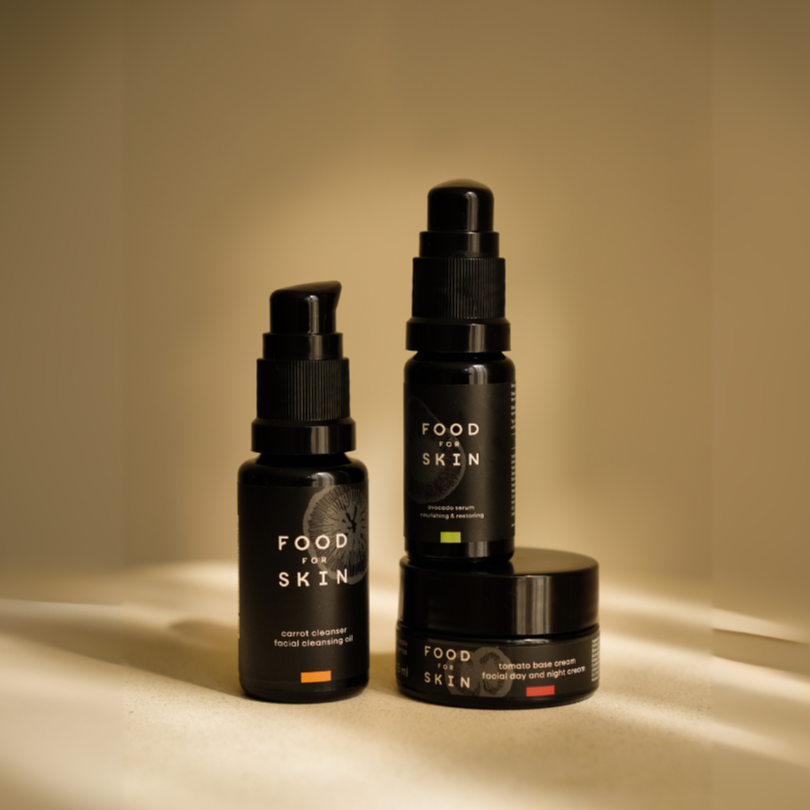
Where hyaluronic acid marketing revolves around one molecule, we use several natural humectants that each work through water-binding and are spread throughout the routine. Glycerin is the best-substantiated humectant in cosmetics, aloe vera binds moisture and calms, konjac root holds onto moisture, and saccharide isomerate attaches to the skin for a long time instead of washing off: in research, the moisture-retaining effect lasted up to 72 hours after a treatment period of several weeks.¹ And the Rocket Eye Cream contains sodium hyaluronate: that's not an alternative to hyaluronic acid, that IS hyaluronic acid, in the form the skin can absorb well.
|
Natural humectant |
What it does |
Where you'll find it |
|---|---|---|
|
Glycerin |
Best-substantiated humectant, binds water to the skin |
|
|
Aloe vera |
Binds moisture via polysaccharides and calms the skin |
|
|
Konjac root |
Holds moisture in the skin |
|
|
Saccharide isomerate |
Attaches to the skin long-term, doesn't wash off |
|
|
Sodium hyaluronate |
Hyaluronic acid itself, in an easily absorbable form |
|
|
Builds a shield around skin cells and cell membranes and protects the skin from dehydration caused by UV radiation, heat, or stress |
Tomato Base Cream |
The power of multiple ingredients instead of one hyaluronic acid molecule
Retaining moisture is teamwork. A humectant attracts water, but without a sealing layer it evaporates just as easily again. That's why we always combine humectants with oils and butters that support the skin barrier: the humectant holds on, the lipids keep the moisture in. That's also why a routine of serum plus cream works better than a standalone hyaluronic acid serum on otherwise unprotected skin.
Hyaluronic acid or a natural alternative: what do you choose?
Honest answer: it's not a contradiction. Both work through water-binding, and the evidence for glycerin as a humectant is just as strong as that for hyaluronic acid. What really matters isn't the choice between two humectants, but whether your skin also gets a protective layer alongside a humectant that keeps the moisture in. A standalone humectant, whichever one, does less than the same humectant within a complete routine. So if you're looking for a "natural alternative to hyaluronic acid," the most honest answer is: you don't need a replacement, you need the right combination.
Curious about the other hype ingredients and their natural counterparts? Check out all the natural alternatives in one overview.
Source ¹: Klock J. & Rosenberger V. (DSM Nutritional Products), "Saccharide Isomerate to Deeply Hydrate Skin and Scalp", Cosmetics & Toiletries, 2013. Note: supplier study; the 72 hours refers to an after-effect following a treatment period, not after a single use.