Natural antioxidants for the skin
2026-09-08 Cathy Molenaar
Antioxidants help protect the skin against free radicals, the unstable molecules created by sun, pollution, and stress. No single antioxidant does this alone: different substances neutralize different radicals. A mix of vitamin E, Q10, polyphenols, and carotenoids therefore protects on more fronts than one single ingredient.
What do antioxidants do for your skin?
Antioxidants neutralize free radicals and thereby help protect the skin against external influences. That wording matters: help protect is what the research supports! Anyone who promises that antioxidants prevent wrinkles or stop aging is promising more than the science backs up. What you can expect: support for the skin in dealing with daily stress from sun, pollution, and climate.
What are free radicals and oxidative stress?
Free radicals are unstable molecules that are continuously formed, mainly by UV radiation and air pollution. They're looking for an electron and take it from whichever molecule is nearby, for example from collagen or from the fats in your skin barrier. When this happens faster than your skin can repair, it's called oxidative stress. It's one of the most important factors in how skin looks over the years, and exactly the process antioxidants act on.
Why a mix of antioxidants does more than one alone
Antioxidants work as a team. Vitamin E protects the fats in your skin, other antioxidants do their work in other places, so they complement each other. There are even indications that they help reactivate one another: Q10 can make vitamin C and E, once they've already done their work, usable again. Research into combinations points the same way: together they do more than apart. Marketing likes to put one ingredient in the spotlight, but your skin gets more from a team than from a single star.
Natural antioxidants in our products
|
Antioxidant |
Natural source |
Where you'll find it |
|---|---|---|
|
Vitamin E (tocopherol) |
Plant-based oils |
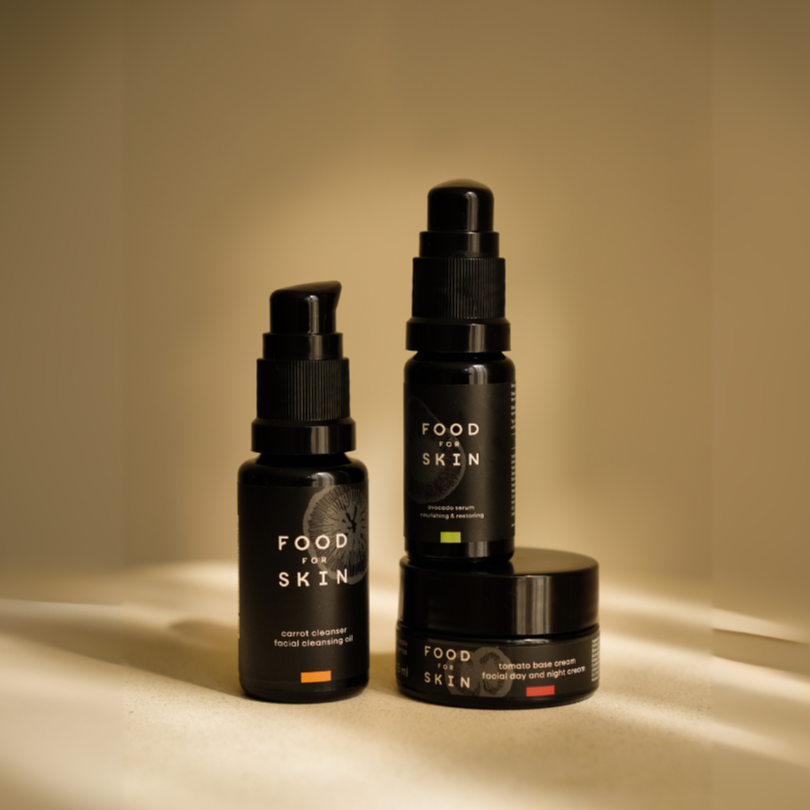
Tomato Base Cream, Carrot Cleanser, Berry Balm, Mineral Sunscreen SPF30, Elderberry Shower Oil, Rocket Eye Cream |
|
Q10 (ubiquinone) |
Coenzyme naturally present in the body |
|
|
Lycopene |
Tomato |
Tomato Base Cream (78% tomato in the formula) |
|
Carotenoids |
Carrot, pumpkin seed, sea buckthorn, algae |
Carrot Cleanser, Pumpkin Serum, Berry Balm and Rocket Eye Cream |
|
Polyphenols |
Rosemary and grape extract |
Rosemary extract: Cucumber Serum, Pumpkin Serum, Avocado Serum. Grape: Mineral Sunscreen SPF30 |
|
Vitamin C |
Kakadu plum |
And the most important teammate of all: daily sun protection. The best way to deal with free radicals is to cause fewer of them, and you do that by protecting your skin against UV radiation.