Natural alternative to retinol
2026-09-07 Cathy Molenaar
Retinol stimulates cell renewal but can be irritating and is not recommended during pregnancy. Natural sources such as carrot extract, algae extract, and sea buckthorn contain carotenoids: a natural provitamin A. Applied to the skin, these mainly work as protective antioxidants. Milder than retinol, with a more subtle effect on cell renewal.
What does retinol do for the skin?
Retinol is a form of vitamin A and one of the best-researched ingredients in skincare. It stimulates cell renewal via receptors in the skin, with a proven effect on fine lines and skin texture. But that power comes at a price: retinol can cause irritation, redness, and flaking, especially on sensitive skin and during the build-up phase. And importantly: retinol is not recommended during pregnancy and breastfeeding. So anyone considering retinol isn't just choosing an ingredient, but also a getting-used-to process and a number of conditions.
Natural alternative to retinol: carotenoids and bakuchiol
Carotenoids: natural provitamin A (vitamin A)
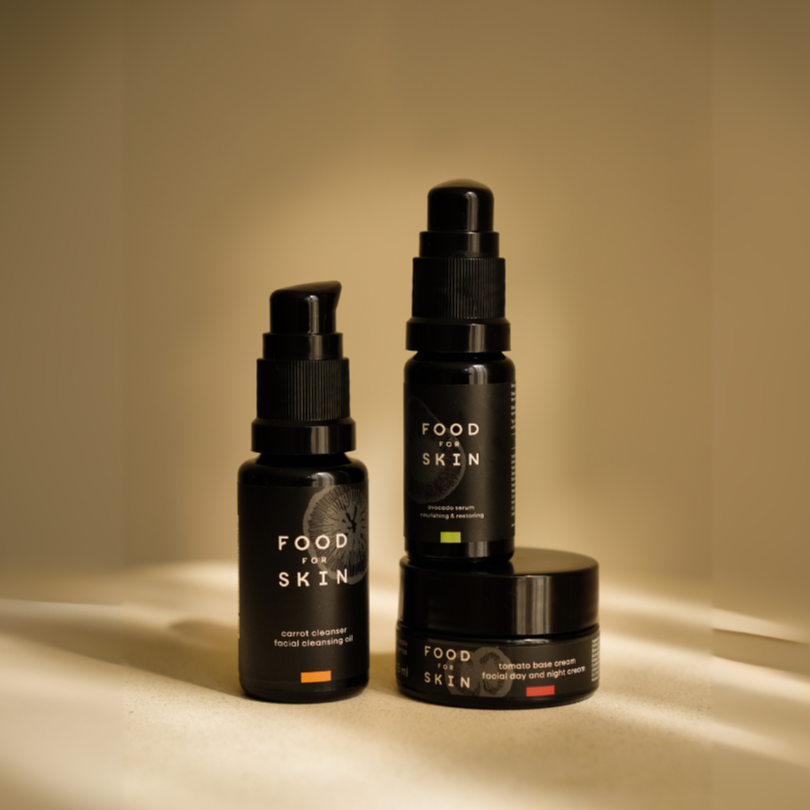
Carrot extract (Daucus carota), algae extract (Dunaliella salina), tomato, and sea buckthorn are rich in carotenoids such as beta-carotene, a natural precursor of vitamin A. To be honest: in the body, beta-carotene is converted into vitamin A, but when applied to the skin, that conversion is limited. In a cream or serum, carotenoids mainly work as an antioxidant that protects the skin against oxidative stress, an important factor in skin aging. This makes them not a retinol equivalent, but a milder route that protects the skin without irritation or pregnancy concerns. At Food for Skin, you'll find carotenoids in, among others, the Carrot Cleanser (carrot extract) and the Pumpkin Serum (beta-carotene from pumpkin seed oil, with sea buckthorn).
Bakuchiol
Bakuchiol, from the seeds of the Psoralea corylifolia plant, is the best-known plant-based alternative to retinol. Some studies show retinol-like effects on the skin with less irritation, although the research is more limited than for retinol itself. We currently don't use bakuchiol. Not because it's bad, but because our philosophy works differently: instead of one hero ingredient that mimics retinol, we combine multiple natural components, carotenoids, antioxidants, and skin-barrier-supporting oils, which together support the skin on more fronts.
Retinol during pregnancy: the safe alternative
For many people, this is the main reason to look for a natural alternative: retinol is not recommended during pregnancy. The carotenoid route doesn't raise those concerns; provitamin A from carrot, algae, or sea buckthorn applied to the skin is not a retinoid. Also read our guide on skincare during your pregnancy. If you're unsure about a specific product or ingredient, consult your midwife or doctor.
Retinol versus natural alternatives: the comparison
Which ingredient to choose depends on your skin goal. If you want the maximum proven effect on lines and can accept irritation and a build-up period, retinol is the candidate. If you want a mild routine that protects and supports the skin, or if you're pregnant, the natural alternative to retinol is the logical choice. You can read more about our view on natural ingredients on the ingredients page.
|
Retinol |
Carotenoids (Food for Skin) |
|
|---|---|---|
|
Function |
Stimulates cell renewal |
Antioxidant, natural provitamin A |
|
Irritation |
Can irritate, build-up phase needed |
Mild |
|
Pregnancy |
Not recommended |
No concern |
|
Expectation |
Proven effect on lines and texture |
Protects, subtle effect on renewal |