What is upcycling in natural cosmetics?
2023-10-06 Angela Ursem
In cosmetics, upcycling involves using residual materials or by-products from other production processes to create new, high-quality cosmetic products. It's called 'upcycling' because it adds value to a raw material. It's a step more valuable than recycling. Recycling reuses something. Upcycling adds value because you use something that would otherwise be discarded.
Upcycling is good for your skin and the environment
This is a sustainable approach that is not only good for the environment but also for your skin. Why?
Upcycling is good for the environment
In the production of food, for example, there is still a lot of waste. Residues are now often turned into animal feed or destroyed. However, beautiful cosmetic raw materials can still be extracted from these (organic) waste streams. Upcycling helps reduce waste and contributes to a cleaner and greener world for future generations.
Quality remains high with upcycling
Upcycling certainly does not mean compromising on product quality. In fact, high-quality (organic) ingredients are often used that might otherwise be lost. Lycopene, for example, would normally come from 'new' tomatoes. Lycopene is a cosmetic ingredient that many brands add to creams because it provides fantastic protection. But Food for Skin believes that food should primarily be for feeding people. And if there's anything left over... we'd love to use it to strengthen the skin! If we have a choice, we always choose upcycled ingredients. In our case, we use the skin, seeds, and liquid from tomatoes from a pasta sauce factory in Italy, which they don't use for the sauce! Unfortunately, that choice isn't always available yet, but it's a work in progress.
The power of the products is paramount
Food for Skin only chooses natural ingredients that truly strengthen and make your skin more resilient according to our skin philosophy. And then we research which of those ingredients we can obtain through upcycling. Not the other way around! Why not? To make a real impact, the product must be of top quality. Because a beautiful story alone isn't enough. So we always aim for that top quality (of course 100% natural, vegan, and as local as possible) and then we work harder to obtain the ingredients from upcycling. Strangely enough, those ingredients are still more expensive than new/virgin ingredients because those streams are not yet optimally set up and involve a lot of manual work, but that doesn't matter to us. We make no concessions on price or quality!
Upcycling drives innovation
Upcycling encourages cosmetic companies to be creative and find new ways to reuse materials. In this way, we hope to positively inspire the beauty industry that it is possible! Maximum impact on your skin, minimal impact on the planet!
How Food for Skin uses upcycling for cosmetics
- Lycopene (antioxidant) from tomato skins. This is, of course, in our bestseller, the Tomato Base Cream. We use the leftover seeds, skins, and liquid from an Italian pasta sauce factory.
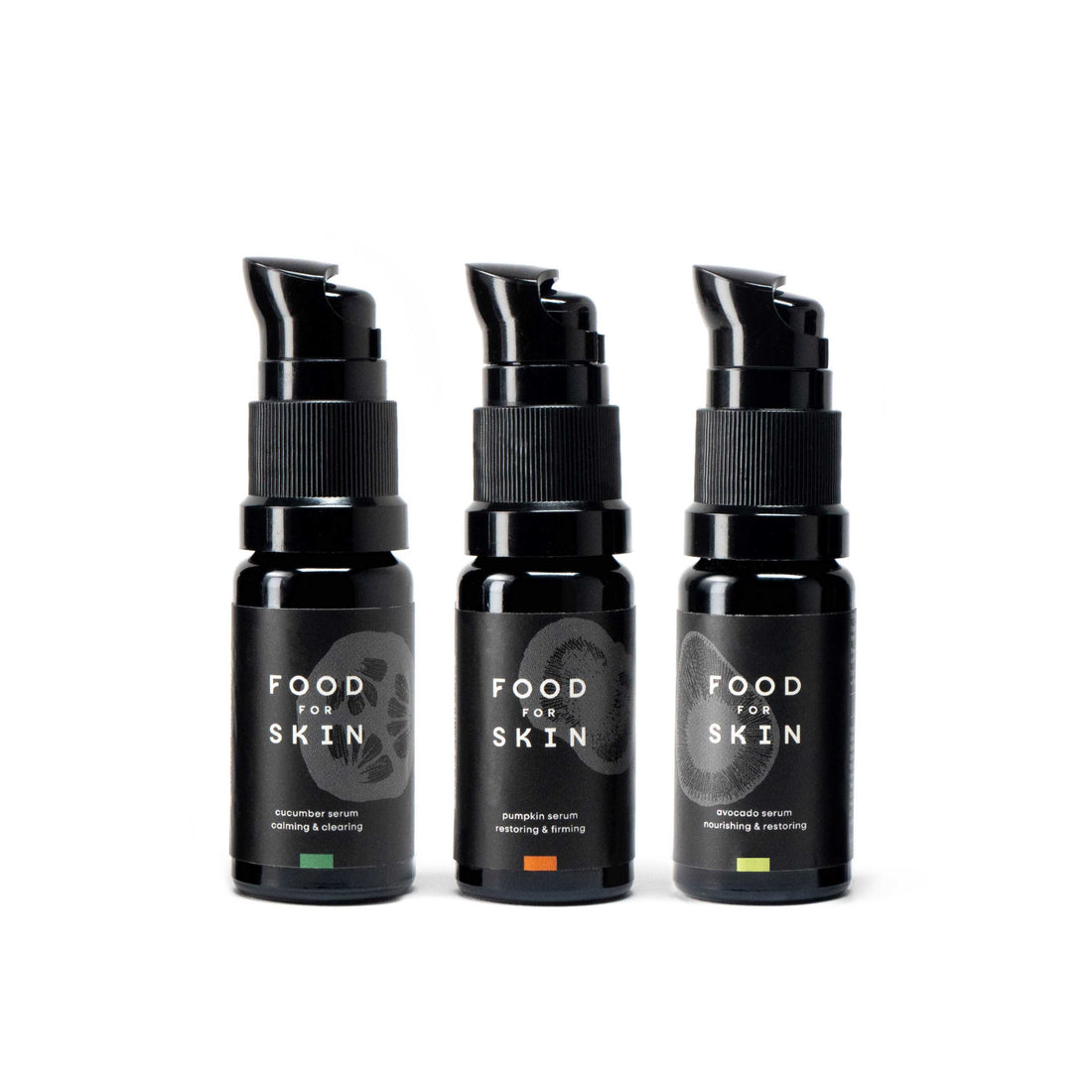
- Avocado oil. Avocados themselves are not very sustainable, because growing them requires an enormous amount of water. That's why Food for Skin uses oil in the Avocado Serum from rejected avocados that are too 'ugly' for the market.
- The SPF30 contains no less than 3 upcycled ingredients. One of these is raspberry seed oil, a by-product of a juice producer. They use the juices, but not the seeds. These are collected, and beautiful oils are pressed from them in a cosmetic lab. Bisabolol and bilberry seed oil also come from upcycling. The berries and flowers are processed in the food industry, leaving behind oil and extract that are then formed into an approved cosmetic ingredient.
- In the Berry Balm, we use a beautiful plum seed oil to retain moisture in the lips. This is extracted from the plum pit that remains after processing in food.
How to integrate upcycling in cosmetics into your daily skincare routine?
- Read the labels: Look for cosmetic products that contain ingredients obtained through upcycling. Pay attention to terms like "upcycled" or "reused."
- DIY options: Consider making homemade beauty products with leftover food materials or other natural sources. There are numerous recipes and tutorials available online. However, pay close attention to hygiene. There's a reason cosmetic companies are carefully monitored for hygiene and product shelf life!
Let's together embark on the path to a more beautiful future, both for ourselves and for the generations to come.