Autumn beauty tips: what pumpkin can do for your skin
2023-05-22 cathy molenaar
Dry skin due to cold weather
October truly is pumpkin month! Halloween, and at the greengrocer's, you see them in all shapes and sizes. Not only are they tasty and very healthy to eat, but did you know they can also really boost your skin?
Now that the heaters are turning on (a few degrees lower, probably), the weather is suddenly much colder, and we're spending less time outdoors, you might notice that your skin reacts differently: perhaps a bit redder in the cold, drier after a day of working from home, and maybe even a bit blotchy. This is actually a very normal reaction of the skin to changing external conditions. Your skin reacts to this and indicates what it needs: gentle care that counteracts dryness and protects it from external influences.
Dry skin in autumn
Your skin is a living, natural organ, so it's actually very logical that it moves with the Dutch seasons. If you look at nature, the season also gives your body what you need in that season, isn't that beautiful?
Pumpkin for your skin
Pumpkin is an ancient remedy and care product. The oldest pumpkin seeds probably come from Mexico. Throughout history, there are many stories about the use of pumpkin for skin healing in Ayurvedic medicine and Chinese medicine. It was widely used as a pain reliever and to combat infections, as pumpkin naturally contains antibacterial components.
Vitamins in pumpkin
Pumpkin seed oil is used in many cosmetic products. It is a vegetable oil full of skin-nourishing ingredients, such as:
-
Beta-carotene – a precursor to vitamin A, for firm skin
-
Vitamin B2 & B3 – softens the skin and improves skin tone
-
Potassium – helps retain moisture in the skin
-
Magnesium – an essential mineral for healthy skin
-
Zinc, which helps with cell renewal and the production of the skin's own collagen
-
Omegas 3, 6 and 9. These 3 essential fatty acids are important for a healthy skin barrier and soft skin with a healthy complexion.
Pumpkin seeds for your skin
Pumpkin seed oil is made from the seeds of the pumpkin, where the pumpkin's DNA resides. 3 kilograms of pumpkin seeds are needed to obtain 1 liter of oil. Once the pumpkins are harvested, the seeds are removed and cleaned. After drying, they are cold-pressed.
Preventing dry skin
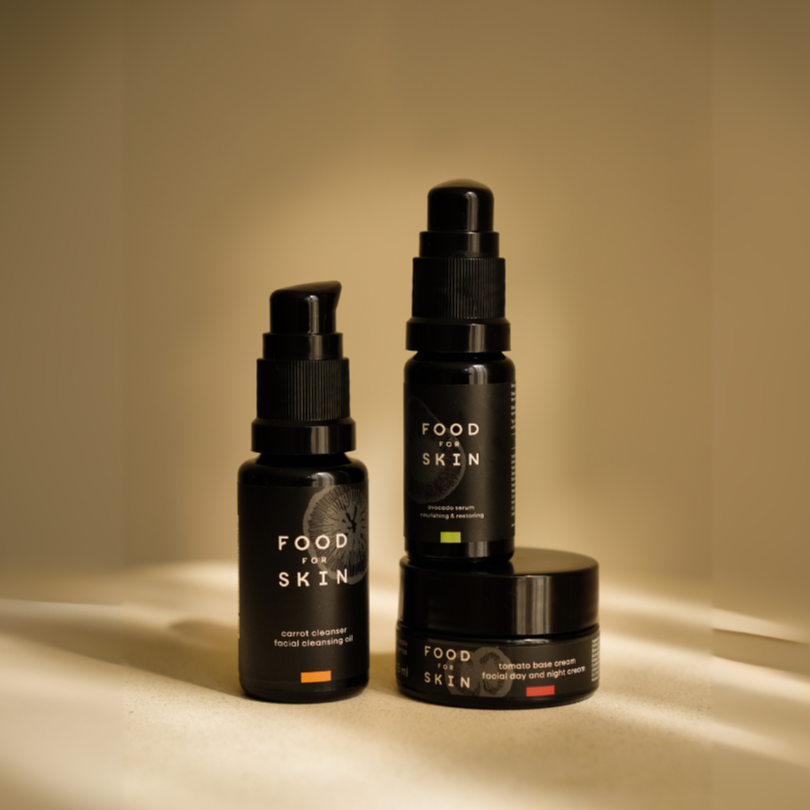
To give your skin an extra boost during the cold months, you can use the Food for Skin Pumpkin Serum. It consists of over 50% pumpkin seed oil. This rich pumpkin seed oil:
-
Restores dry and blotchy skin
-
Which softens the appearance of lines
-
Prevents cracks in the skin (also stretch marks)
-
Helps against inflammation
-
Helps renew the skin
The serum is supplemented with other wonderful natural oils such as:
-
Cucumber seed extract - works to regulate moisture
-
Chia seed oil - has a soothing effect
-
Broccoli seed oil - is protective
-
Candeia tree extract - has healing properties
-
Sea buckthorn oil - is protective
-
Sunflower oil - as a carrier oil
-
Rosemary extract - antioxidant and preservative
-
Q10 - for full, firm, and smooth skin
The Pumpkin Serum contains no synthetic substances, no perfume, no alcohol, and deliberately no essential oils, so it can be used around the eyes without problems. The serum is dark orange and absorbs quickly into the skin. The scent is 100% natural and smells nutty. All in all, a beautiful serum with only wonderful natural ingredients!
In addition to fine skincare and a powerful serum, we have some more great tips to keep your skin strong after summer. You can read them here.
"BinnensteBuiten" pumpkin seeds
At Food for Skin, we go beyond just clean products. We try to source as many ingredients as possible from residual streams. And if that doesn't exist, we go looking for it ourselves! For example, we are currently working on a subsidy project to make pumpkin seed oil from Dutch pumpkins. "BinnensteBuiten" (Inside Out, a Dutch TV program) paid attention to this process. Angela and Cathy Ursem – circular beauty entrepreneurs – were interviewed by Marieke Eyskoot. Want to watch it again? You can do so here!