We'd be happy to walk you through our considerations for avoiding certain ingredients. The skin is a complex ecosystem, and what you put on it matters. That's why we critically examine ingredients: what is their function, what does science say, and how do risk and benefit relate to each other?
We prefer to avoid some substances. Not necessarily because they are always harmful under normal use, but because there is scientific debate about them, because we want to limit environmental impact, or because there are alternatives that better suit our formulas and philosophy.
In short
The best scientific consensus is that many cosmetic ingredients are safe within legal applications and concentrations. At the same time, for some substances, there are indications or uncertainties regarding hormonal activity, skin irritation, long-term and combined exposure, or environmental impact.
Therefore, we believe a critical, conscious selection is important.
Want to read more about what we do use? You can do that here.
How do we assess our ingredients?
Our choices are based on three pillars:
1. Skin health, short and long term
We look at irritation, allergies, and possible disruption of the skin barrier.
2. Systemic safety
Is a substance absorbed into the body through the skin? And if so: how much and what is known about it?
3. Environmental impact
What happens after you rinse it off? Does a substance break down or does it remain in water, soil, or organisms?
Wherever possible, we base our decisions on systematic reviews, scientific studies, and advice from authorities such as the European Commission, the SCCS, and ECHA.
Important to know: cosmetics sold in the EU must meet legal safety requirements. The safety of every end product must be assessed, and for certain groups, such as UV filters, preservatives, and colorants, additional legal requirements apply.
Ingredients we prefer to avoid
1. Substances with potential endocrine-disrupting properties
Examples: certain parabens, bisphenols, some UV filters such as oxybenzone and octinoxate, and certain phthalates.
-
For some substances from these groups, hormonal activity has been found in laboratory and animal studies. This means that a substance can influence hormone receptors or hormonal processes under certain conditions. It does not automatically prove that normal use in cosmetics is harmful to humans.
-
Regulators assess substances based on the concentration used and the expected exposure. For example, the SCCS concluded that propylparaben can be safely used within the allowed concentration, despite indications of possible hormonal effects. According to the SCCS, the available evidence was not strong enough to classify propylparaben as an endocrine-disrupting substance.
-
Indications of hormonal activity have also been found in laboratory studies for certain organic UV filters. Safety limits have been established for approved applications.
-
Research in humans is often inconsistent and difficult to interpret. Furthermore, a correlation in a population study does not yet prove a causal relationship.
-
Scientific debate remains about cumulative and combined exposure. By this, we mean the sum of small amounts from different products and sources. Perhaps not a problem with one product, but what happens when you use multiple products daily? There is no clear answer to this for every combination yet.
Our choice: we avoid these substances where possible. Not because it has been proven that every product containing them is dangerous, but because there is scientific debate and we can create formulas without these ingredients.
2. Known skin irritants or sensitizers
Examples: SLS, SLES, synthetic fragrance components, and formaldehyde releasers.
-
SLS can disrupt the skin barrier and cause irritation, especially with repeated use or in higher concentrations. Therefore, SLS is even used in dermatological research to induce skin irritation in a controlled manner.
-
Fragrance substances are among the known causes of allergic contact eczema. Contact allergy does not simply arise from "too much of one substance," but from a combination of exposure and personal sensitivity. Once sensitized, a person can then react to even a very small amount.
-
Formaldehyde releasers are preservatives that can release small amounts of formaldehyde during use or storage. Some of these substances are allowed, but they can cause contact eczema in sensitive or allergic individuals.
Our choice: minimize or avoid, especially for sensitive skin.
We also try to use as few essential oils as possible. Sometimes it is not possible to keep the scent of natural ingredients stable without essential oil. Therefore, a very low percentage of essential oil has been added to some products.
To be fair: essential oils are natural, but that does not automatically make them mild. They can contain substances such as limonene, linalool, citral, and geraniol, which can cause an allergic reaction in some people. Therefore, we clearly list them in our ingredient lists.
3. Substances with an uncertain long-term profile
Examples: certain nanoparticles and microplastics.
-
Nanoparticles are extremely small particles, thousands of times smaller than a hair. Research shows that approved forms of nano zinc oxide hardly penetrate healthy, intact skin. The SCCS considers specific forms of nano zinc oxide within the allowed applications as safe or as a limited risk for use on the skin. Other considerations apply to inhalation.
-
The effects depend on, among other things, the size, shape, coating, and application of the particle. Therefore, you cannot assess all nanoparticles as one group.
-
Microplastics have a well-documented environmental impact because they break down very slowly and can spread in the environment. Microplastics have now also been found in the human body, but what this means for our health at current exposure levels is still insufficiently clear.
Our choice: as a precautionary measure, we do not use nanoparticles and opt for non-nano uncoated zinc oxide in our sun protection. We avoid added microplastics due to their persistence and environmental impact. Our products have been tested for this by the Plastic Soup Foundation.
4. Substances with environmental impact
Examples: oxybenzone, octinoxate, octocrylene, microplastics, and certain poorly degradable silicones.
-
Laboratory research shows that some organic UV filters, including oxybenzone, can have harmful effects on corals and other aquatic organisms at certain concentrations.
-
There is still debate about the extent to which these laboratory concentrations correspond to exposure in the open sea. Climate change and warming of seawater are also much larger causes of large-scale coral bleaching. We therefore do not want to exaggerate the possible contribution of UV filters beyond what the evidence warrants.
-
Microplastics are persistent: they break down very slowly and can accumulate in water, soil, and organisms.
-
Not all silicones have the same environmental profile. Concerns about persistence and accumulation in the environment exist especially around certain volatile, cyclic silicones.
Our choice: we avoid these ingredients where possible and opt for alternatives that better align with our natural and environmentally conscious formulas.
5. Superfluous or replaceable ingredients
Examples: mineral oils, petroleum derivatives, PEGs, certain polymers, and aluminum salts in some applications.
-
Mineral oils are effective occlusive ingredients. They form a sealing layer on the skin and can thereby reduce moisture loss. This is a useful skin function, and they are considered safe within the allowed quality.
-
We prefer to choose vegetable oils that, in addition to their sealing and softening effect, naturally contain fatty acids and other components. This does not automatically make them better for every skin, but they fit better with our formulas and philosophy.
-
PEGs and silicones can have useful functions, for example as an emulsifier or for a smooth skin feel. We do not use them because we prefer to fulfill these functions with ingredients of natural or plant origin.
And then water. Huh? Yep.
Water is not bad for the skin, but in a cosmetic product, it is primarily a solvent and carrier. For creams, an aqueous phase is needed to mix ingredients and make the cream spreadable. However, we do not want the majority of a product to consist of added water when we can fill that space functionally.
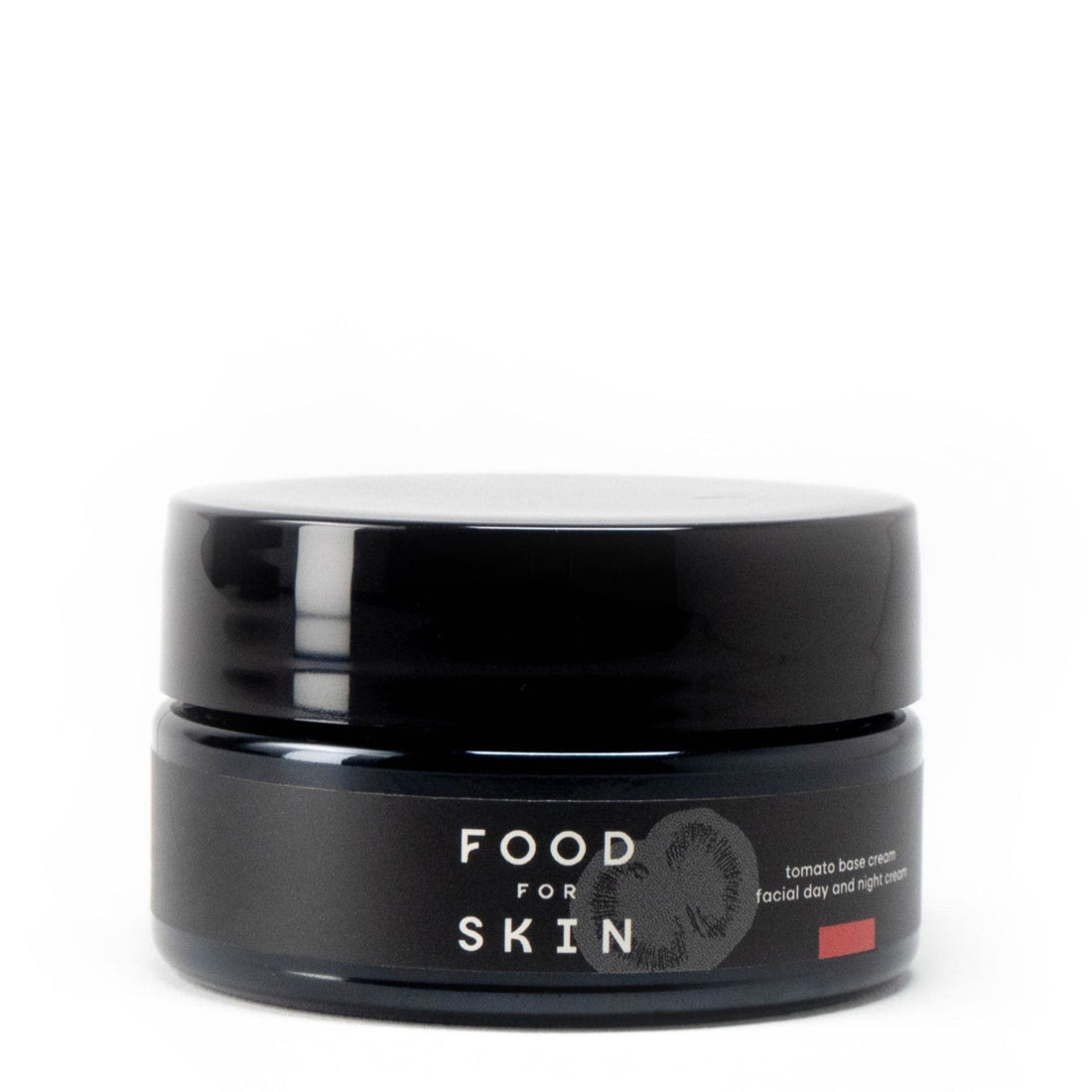
Therefore, we opt for 0% added water if a product is not a cream. When an aqueous component is needed, we use, for example, tomato juice or aloe vera juice. These also largely consist of water, let's be honest about that, but also naturally contain other plant components that do something for the skin.
Our choice: ingredients that have a clear function within the formula, without unnecessary fillers.
What does science really say?
-
Many of the ingredients we avoid have been assessed as safe by regulators within certain applications and concentrations.
-
At the same time, for some substances, there are indications of possible effects or questions remain about long-term, cumulative, or combined exposure.
-
Results from laboratory or animal studies may give rise to further research, but do not automatically prove that the same effects occur in humans who use a cosmetic product normally.
-
There is rarely black-and-white evidence. It's about exposure, concentration, application, risk assessment, and choices within uncertainty.
We consciously choose to avoid where possible and opt for alternatives that fit our formulas. We can achieve the same cosmetic function without ingredients about which there is debate.
Our philosophy summarized
-
Not everything synthetic is bad.
-
Not everything natural is automatically better.
-
A substance can show a certain effect in a laboratory, without it being proven that normal use in cosmetics causes the same effect.
-
If there are good alternatives that fit our skin and environmental philosophy, we choose them.
We avoid certain ingredients if:
-
alternatives exist that better suit our formulas
-
there is scientific doubt, debate, or nuance
-
we want to limit unnecessary exposure
-
we want to minimize the burden on both the skin and the planet
Our blacklist written out
This blacklist is a list of ingredients and substance groups that we do not use.
- Acetone
- Aluminum salts
- Added water as an unnecessary filler
- Artificial colours
- BHA
- BHT
- Bisphenols
- Certain synthetic copolymers
- Formaldehyde-releasers
- Genetically modified ingredients
- Mineral oils
- Added microplastics
- Nanoparticles
- Octinoxate
- Octocrylene
- Oxybenzone
- Propylene glycol
- Polyethylene glycol
- Parabens
- PEGs
- Petroleum derivatives
- Synthetic fragrance
- Certain phthalates
- Silicones
- SLS
- SLES
- Synthetic colorants
- Toluene