Ceramides and natural lipids for your skin barrier
2026-09-25 Cathy Molenaar
Ceramides are skin-identical fats that, together with other lipids, form the skin barrier: the layer that keeps moisture in and irritants out. Food for Skin products do not contain ceramides. What we do provide are the natural lipids, including linoleic acid from plant oils, that support the skin barrier and supply the building blocks for your skin's own ceramide production.
What are ceramides and what do they do for your skin?
Think of the skin barrier as a wall: the skin cells are the bricks, and ceramides and other lipids are the mortar in between. That mortar keeps the wall watertight: moisture stays in, irritating substances stay out. In dry or sensitive skin, this lipid layer is often disrupted, and you can feel it: tightness, flaking, reacting to products more quickly. Hence the popularity of ceramide creams: the problem they address is real.
Do our products contain ceramides?
No, and we are deliberately very clear about that: there are no ceramides in Food for Skin formulas. What they do contain works towards the same goal, but tackles it at the source. Plant oils such as sunflower oil are rich in linoleic acid, an essential fatty acid your skin needs for a healthy barrier and for making its own ceramides. A lack of linoleic acid is a documented cause of barrier problems. So we support rather than add, and we would rather say that honestly than suggest ceramides on the label.
Natural lipids that support the skin barrier
| Lipid | What it does for the barrier | Where to find it |
|---|---|---|
| Sunflower oil (linoleic acid) | Essential fatty acid, building block for the skin's own ceramide production | Throughout the range |
| Oat oil | Supports the barrier and soothes sensitive skin | Cucumber Serum, Avocado Serum |
| Jojoba oil | Forms a protective layer that limits moisture loss | Carrot Cleanser |
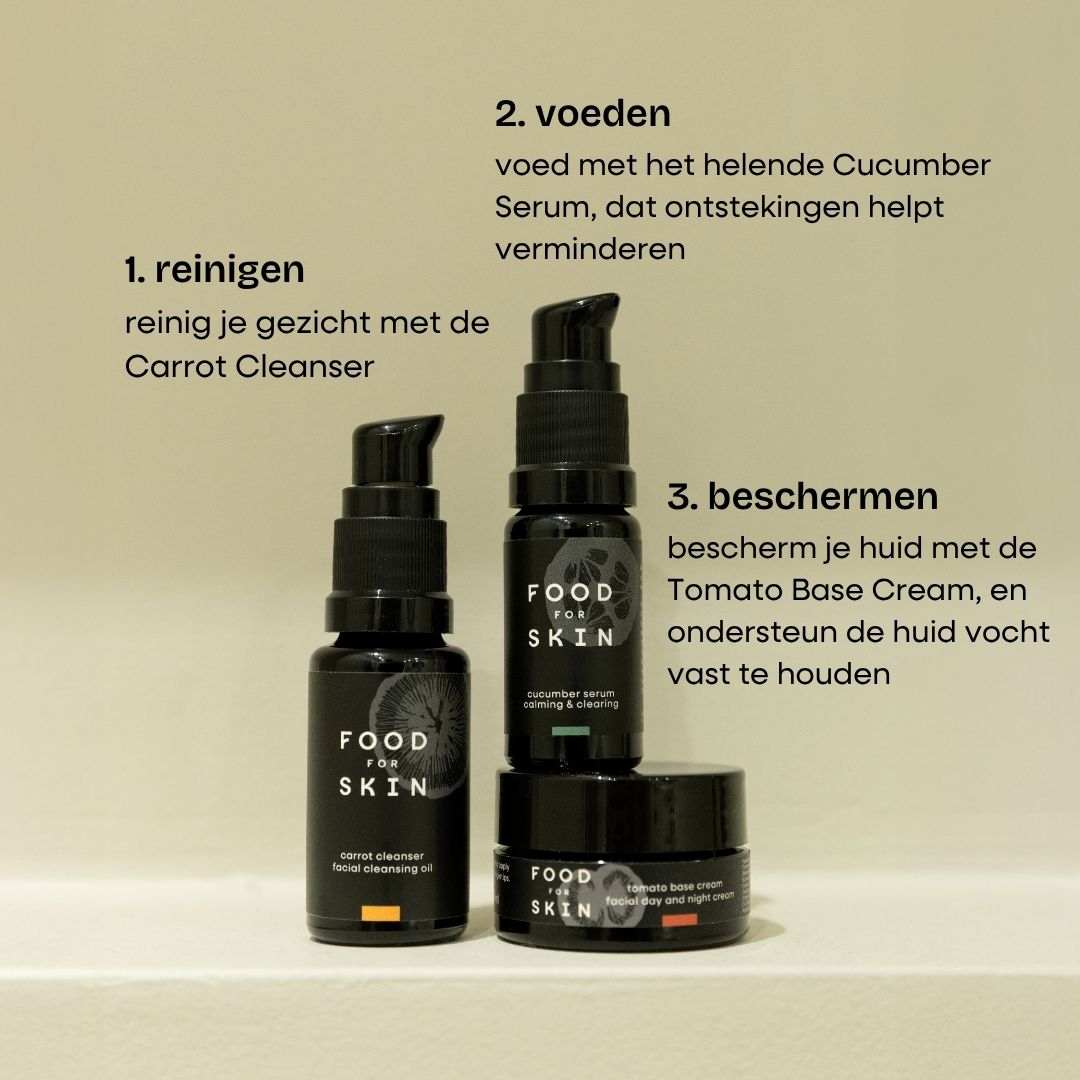
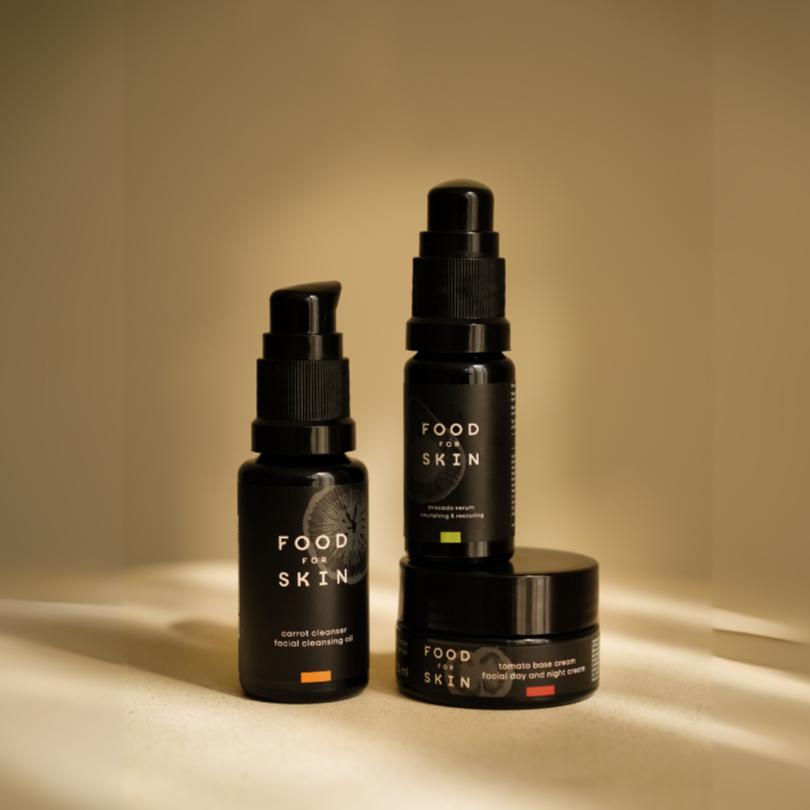
| Shea butter | Nourishes and completes the Food for Skin 3-step routine | Tomato Base Cream |
| Squalane | Skin-identical lipid, light and non-comedogenic | Cucumber Serum |
Do you need a ceramide cream for dry skin?
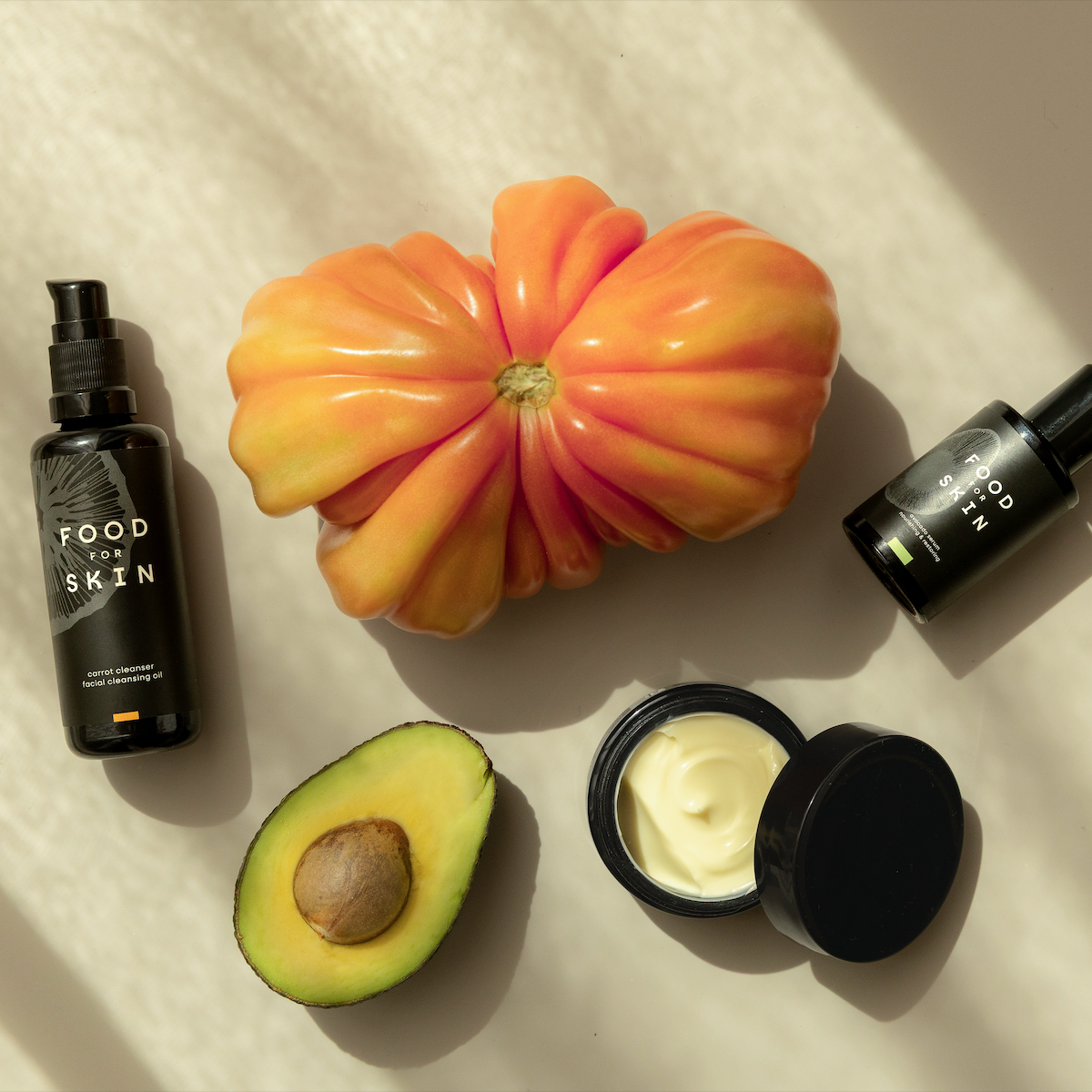
Not necessarily. What matters is that your skin barrier gets lipids and isn't stripped. That can be done with ceramides from a cream, but just as well with plant oils rich in essential fatty acids, combined with gentle cleansing. That last part is at least as important: a harsh cleanser removes what your cream has just put in. That is why our Carrot Cleanser cleanses with an oil base, and why the Avocado Serum is the lipid specialist for dry skin that loses moisture.
Curious about the other hype ingredients and their natural counterparts? See all natural alternatives at a glance.