
What helps against acne?
Almost everyone experiences it to a greater or lesser extent: acne or pimples. Some only suffer from it during their teenage years or in times of stress, for example. Others experience acne later in life (like founder Angela, who suffered from acne until she was 45). It's absolutely nothing to be ashamed of; almost everyone knows the problem.
But let's be honest: it's not pleasant to suffer from it, so in this blog, we'll give some tips to answer the question: "What helps against acne?". Because there are different types of acne, this blog will focus on pimples in general. For severe acne, we recommend seeking additional help from a skin therapist or dermatologist.
Cause of acne
Acne often occurs when the sebaceous glands in our face become overactive and our pores become clogged. Hormones, especially during that special time of the month, play a major role in this. What should we absolutely not do? Please try not to squeeze! This can only worsen the situation and leave scars. Also, avoid scrubs with coarse grains, as these can irritate your skin. We only recommend strong peels under the expertise of a beautician. Incorrect use can lead to hyperpigmentation, dry patches, or redness in the face in the long term.
Acne care
What you should do: maintain a simple but solid skincare routine with mild cleansing. Cleanse your face regularly, but don't overdo it by scrubbing everything off. Once or twice a day is more than enough. Use mild cleansers (preferably non-foaming) to avoid stressing your skin too much. Your natural skin barrier has a protective function. You don't want to remove it; if you do (and this happens with chemical cleansers without you realizing it), you run a higher risk of infections.
Prevent acne
They say for a reason: "prevention is better than cure." You can prevent acne with the following tips!
Healthy nutrition against acne
What do you eat and drink? It has more impact than you think! Monitor your sugar intake and add healthy fats, vegetables, and water to your diet. Try to minimize sugars (including all added sugars like fructose or stevia). Alcohol can also truly affect the skin, so limit it if you want to improve your skin condition. Drink as much (purified) water and herbal tea as possible.
Humidity and acne
Humidity is also part of the acne prevention picture. This applies in your own home, at work, but also outdoors. Both too dry and too humid air can contribute to acne. A humidifier can be a useful tool here. Air that is too dry (anything below 40 percent) can cause physical complaints. A humidity level of between 40 and 60 percent is ideal for your skin and mucous membranes.
Cause of chin acne
Collars of coats, scarves, a phone to your ear, bedding... they can all be sources of bacteria. Do you often have pimples on your jawline? Then ask yourself when your turtleneck, scarf, or coat was last washed. We recommend changing your pillowcase at least once a week, for example. We'll repeat it just to be sure: be careful not to scratch spots or wounds; let your skin heal in the open air. This prevents the spread of bacteria.
Natural solution for acne
Which products should you or shouldn't you use if you suffer from acne? Synthetic or natural; (at Food for Skin, everything is mild and natural) go for products that support the natural microbiome of your skin. That's essentially the small army of good bacteria on your skin. You don't want to scrub or peel them off. Choose products that support the skin's own functions and help strengthen your skin. Don't make it too easy for your skin by taking over everything with a 12-step routine. Strong skin is skin that can regulate itself well. Therefore, don't pamper your skin too much, as your skin can become 'lazy'. You don't want that, because active skin ensures strong skin that is better resistant to viruses and less beneficial bacteria.
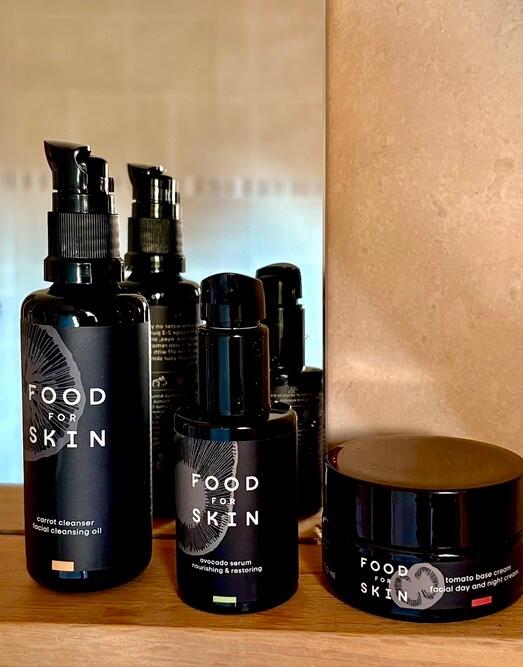
Specifically for pimples, we recommend the following Food for Skin products: The Carrot Cleanser and the Cucumber Serum. Both products work beautifully, are healing, protective, and reduce redness in the face.
Treating bacne
Oh, and let's also talk about something that is sometimes forgotten but certainly no less annoying: bacne, or acne or pimples on the back. Here are some tips:
-
After washing your hair, especially if you use conditioner, it's a good idea to wash your back again with a mild soap. Conditioner can linger on your skin and clog your pores, resulting in those unwanted bumps on your back. So, make sure you rinse well and don't leave any residue behind. A small effort with potentially great benefits!
-
In any case, it's better to shower with cold or lukewarm water instead of hot. A hot shower can affect your natural protection, resulting in tight or stinging skin. If you prefer not to constantly moisturize with body lotion, it's advisable to shower with colder water. If the water contains a lot of lime, a descaling shower head is not a superfluous luxury. Also, a shower oil instead of shower gel can be more nourishing and gentle on your skin.
Acne products
It's tempting to believe that an extensive range of products is the key to perfect skin, but sometimes the opposite can be true, especially if you suffer from acne. An exaggerated skincare routine can unbalance your microbiome. It's like a delicate dance between your skin and the products you use. If you use too many and too aggressive products, it can disrupt the natural balance of good bacteria on your skin. This can actually result in an overproduction of sebum, as your skin thinks it has a deficiency. More specialized acne products therefore don't always mean better for your skin.
Face scrubbing acne
Let's also consider overly aggressive scrubs, exfoliants, and peels. Although they initially promise and deliver smooth skin, they can cause long-term damage. Deeper layers of your skin can be damaged. This can eventually lead to pigment spots that you only start to see when you are fully in the sun. We therefore advise against frequent face scrubbing for acne. It doesn't hurt to do an occasional at-home peel, but opt for a superficial mild version or ask a beautician for advice.
What to do for acne? Our conclusion
Our conclusion on what really helps with acne? Remember that balance is key. A simple, well-thought-out skincare routine can sometimes be more effective than an abundance of products. At Food for Skin, we believe in a natural approach to reset your skincare. You only need 3 products for this!
Keep shining, keep being beautiful, and remember that it's never wrong to ask for help when it comes to your skin's health. Together we work towards strong, resilient skin!