How skin cell renewal works (and why results take time)
2026-09-07 Angela Ursem
“I've been using this cream for two days now and I don't see anything yet.”
I get it. You start a new skincare product and secretly hope you'll wake up the next morning with completely different skin. But your skin doesn't work that way.
Your skin has its own biological rhythm. It renews itself continuously, and that process takes time. New skin cells form deeper in the skin and slowly move toward the surface. Only there do they become part of the skin you see in the mirror. And the older you get, the slower this process often runs.
That's exactly why skincare needs time. You're not just caring for the skin you see today, but also the skin that becomes visible later.
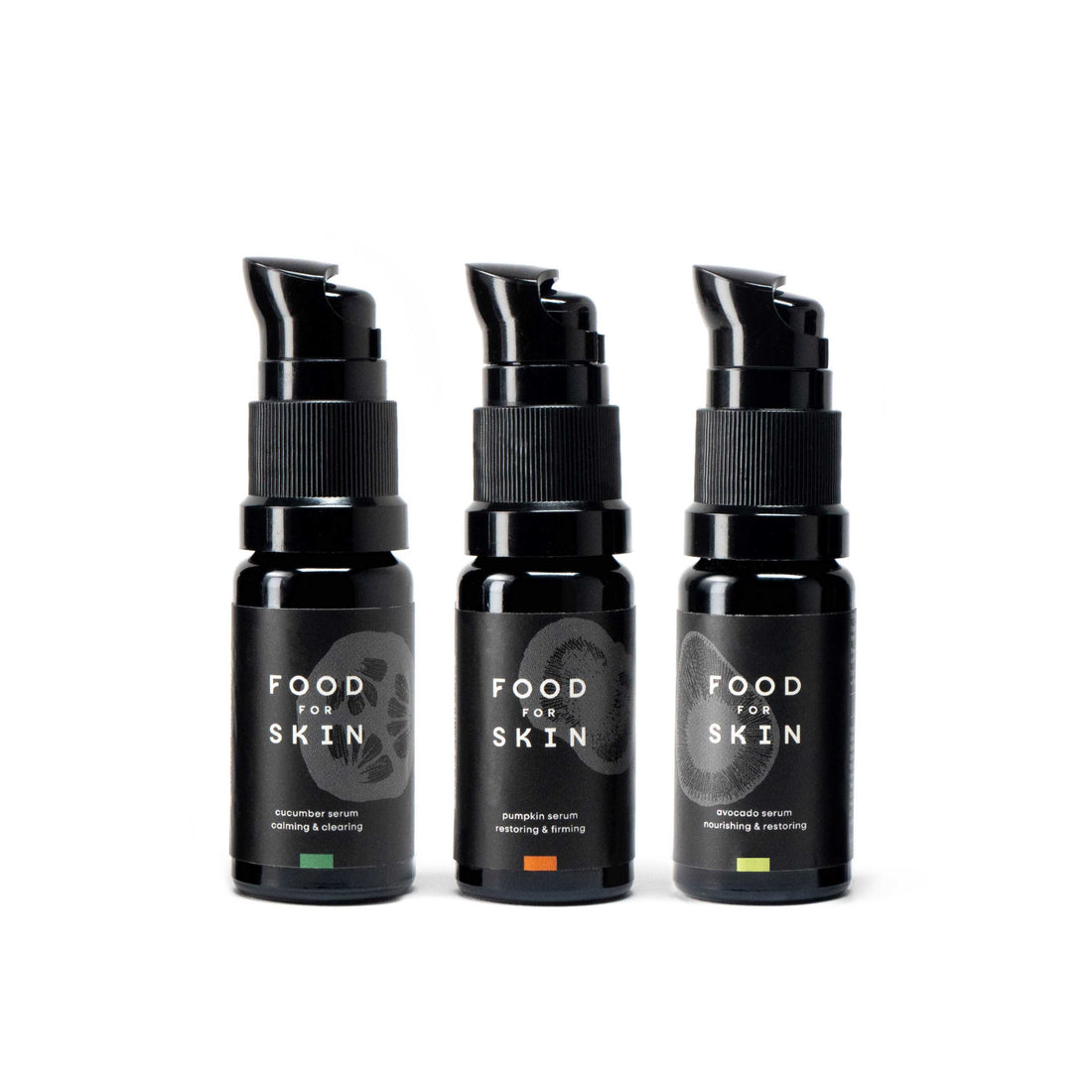
That's why we have trial sets. These are enough for 3-4 weeks. This gives your skin enough time to get used to a routine, so you can actually start seeing results.
What is skin cell renewal?
Cell renewal is the natural process in which your skin creates new skin cells and sheds old ones.
New skin cells form in the deepest layers of the epidermis. From there, they slowly move upward. Along the way, they change and mature. Once they reach the skin's surface, they become part of your protective skin barrier, and eventually the old cells shed.
And then the whole cycle starts again. This is called skin renewal or cell renewal. Your skin does this entirely on its own. Good skincare doesn't need to take over that system, but supports the process that's already there naturally.
How long does skin renewal take?
You often hear that your skin renews itself every 28 days. That's a useful guideline, but not a fixed rule for everyone.
Age, for example, plays an important role. As you get older, cell renewal usually slows down. Factors like sun, sleep, stress, and the condition of your skin can also have an effect.
Around age 25
Around this age, it's often assumed to be about 28 days. Skin renews relatively quickly, and recovery, elasticity, and that fresh glow can sometimes seem almost effortless.
Around age 30
Skin renewal can slow down a bit, moving toward roughly 30 to 35 days. You may gradually start noticing a difference in things like hydration and radiance. A consistent routine becomes increasingly important now.
Around age 35
Around 35, skin renewal can take about 35 to 40 days. Dead skin cells may stay on the surface a bit longer, which can make your skin look duller. Fine lines may also start to stand out more.
Around age 40
Around 40, the renewal process can take about 40 to 50 days. At the same time, collagen production, among other things, changes, which can give your skin different needs.
That doesn't mean you suddenly need a bathroom cabinet full of “anti-aging.” A calm routine that nourishes and protects your skin is exactly what's valuable.
From age 45
From around age 45, skin renewal can take 45 to 60 days or longer. Skin can become drier, and the skin barrier can become more vulnerable.
Here's what matters most, in our view: consistency is more important than intensity. You don't need to keep pushing your skin harder. Give it good support instead.
Why skincare doesn't work within two days
A cream or serum can immediately make your skin feel softer or more comfortable. But changes in things like skin texture, radiance, or pigmentation usually need more time.
That's because skin cells first have to make their natural journey toward the skin's surface.
You might, for example, notice a difference in:
-
hydration
-
a fresher glow
-
a more even complexion
-
a softer skin texture
-
less visible dry lines
But give your skin the time for that. Switching products every few days usually isn't a good plan. In the end, you no longer know what your skin is reacting to, and a product barely gets the chance to do anything.
How does the skin renewal cycle work?
To keep it simple, you can picture a skin cycle of about 28 days roughly like this.
Day 1 to 7: new skin cells form
New skin cells are formed in the deepest layer of the epidermis.
Day 8 to 14: the cells move up
The new cells slowly move toward the skin's surface. Meanwhile, they continue to develop.
Day 15 to 21: the skin cells mature
The cells continue to change and prepare for their protective function at the skin's surface.
Day 22 to 28: old skin cells shed
Eventually, old skin cells are shed, making way for the newer cells.
This is intentionally a simplified timeline. As mentioned, this process can take longer for older skin.
What slows down skin cell renewal?
Age isn't the only factor. Your lifestyle and environment also influence how your skin functions.
Think of things like:
-
UV radiation
-
prolonged stress
-
lack of sleep
-
smoking
-
dehydration
-
a skin barrier that's out of balance
We think that skin barrier in particular is important. It's the protective layer that keeps moisture in and helps block unwanted outside influences. If it gets out of balance, you may notice dryness, redness, sensitivity, and impurities.
Being harsher on your skin usually isn't the answer.
This is how you support natural skin renewal
Your skin renews itself. You don't need any complicated tricks for that. But you can create conditions that let your skin do its work as well as possible.
Keep your skincare consistent
Use a simple routine with mild products rather than a new miracle ingredient every week.
Hydrate and nourish your skin
Both sufficient moisture and good fats play a role in supple, strong skin.
Eat a varied diet
Vitamins, antioxidants, and healthy fats aren't just interesting in a jar. Your skin is an organ, and it's also nourished from the inside.
Read more about eating well for your skin in this blog.
Get enough sleep
During sleep, your body gets time to recover. Your skin benefits from that too.
Protect your skin from UV radiation
UV can speed up skin aging and damage the skin barrier. Good sun protection is therefore one of the most important things you can do for your skin.
Keep moving
Exercise supports things like your circulation and overall health. And yes, your skin is included in that too.
Why a trial set can really help with improving your skin
Using new skincare once or twice actually tells you very little.
Your skin needs time to get used to a routine. Especially when your skin renewal runs a bit slower, several weeks may pass before the skin cells you're supporting eventually become visible on the surface.
With a trial set, you can use a routine consistently and discover how your skin responds to it, without immediately buying all the full-size products.
And maybe even more important: don't change ten other things at the same time, so you can clearly see where the effect is coming from.
When do you see results from skincare?
That depends on what you mean by “results.”
Hydration: your skin can feel softer and more comfortable within a few days.
Glow: changes in radiance usually take a few weeks.
Skin texture: count on a number of weeks rather than a few days.
Pigmentation and fine lines: these kinds of changes usually need more time and vary strongly per skin.
According to Cathy Molenaar, co-founder of Food for Skin and a skin specialist for 30 years, it's important not to keep overstimulating your skin. Skin has its own system. Good skincare supports that system rather than constantly trying to correct it.
So still don't see a huge difference after three days? Totally normal. Give your skin time!