
There you are, standing in front of the shelf. The choice is huge! You've probably seen many different creams in stores, on TV, or online. One of the most frequently asked questions when it comes to skincare is: what exactly is the difference between a day cream and a night cream?
Do we really need both, or is this just a clever marketing trick to make you buy more products? In this blog, we delve deeper into this question and look at the differences between day and night creams, so you can make more informed choices for your skincare routine.
Difference between day and night cream
The difference between day and night cream can be attributed to 3 pillars.
1. Protection against environmental factors
One of the main functions of a natural day cream is to protect the skin against environmental factors such as UV radiation, pollution, and weather conditions. That's why many day creams contain ingredients like SPF (sun protection factor) to protect the skin from harmful radiation. In addition, natural face creams contain ingredients that strengthen and hydrate the skin barrier, without leaving a greasy feeling. Night creams, on the other hand, focus on recovery and usually do not contain SPF, as this is not necessary at night. Therefore, nourishing night creams are often richer and oilier, as 'looks' are less important then.
So yes, there can be differences between a day and a night cream. But you have to be an ingredient expert to properly assess this. Unfortunately, we also see many examples where the texture is somewhat thicker, but the ingredients are almost identical. So, do your research carefully.
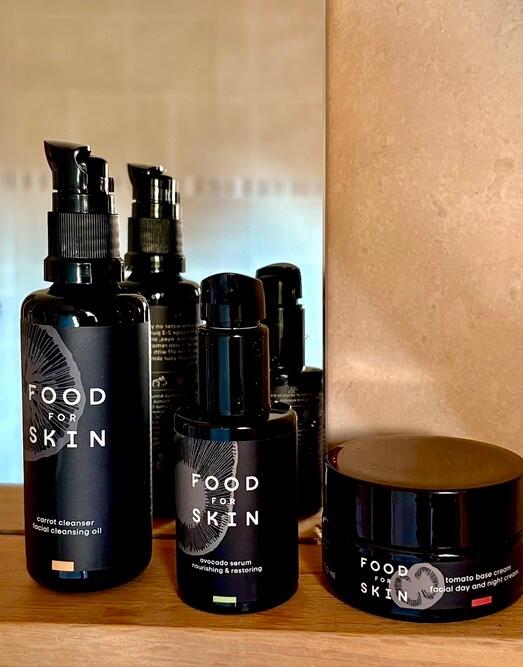
But why does Food for Skin only have one cream? Food for Skin's Tomato Base Cream is the result of 2.5 years of experimenting to create the perfect cream suitable for all moments, combining the benefits of both:
- The cream nourishes the skin + retains moisture in the skin + protects against weather influences and pollution
- The cream is beautifully matte with a slight sheen, making it pleasant for both day and night
- We deliberately choose to offer SPF as a separate product. This way, you don't create a false sense of security by only applying sun protection in the morning. We also don't believe it's necessary to apply sunscreen every day. This depends on how long you'll be in the sun, the UV index, and your skin type. A mineral filter occupies at least 25% of the cream, which we find a waste on days when SPF is not needed. We prefer to fill that 25% with active ingredients that nourish, hydrate, and protect your skin. Did you know that our SPF30 is not only protective but also very nourishing? On sunny days, you could even use only the SPF as a day cream!
Do you want to experience firsthand that you can achieve more with fewer products? Reset your skincare and test our Tomato Base Cream or order one of our sample sets.
2. Active ingredients for repair versus protection
The second difference can lie in the active ingredients. Day creams often contain antioxidants like vitamins C and E, which help protect the skin against free radicals that can cause damage during the day. Night creams, on the other hand, usually contain higher concentrations of nourishing and restorative ingredients, which help the skin regenerate and repair the damage incurred during the day.
Food for Skin has deliberately chosen to combine both protective, nourishing, and restorative ingredients in one jar, so your skin is nourished and repaired both day and night.
3. Texture and formula
Day creams often have a lighter texture, so they absorb quickly and you can easily apply makeup. They are designed to keep your skin fresh and hydrated all day long without shine. Night creams, however, are usually richer and thicker, as they are meant to penetrate deep into the skin overnight and provide intensive hydration and nourishment.
But why does Food for Skin only have one cream? Again: this was our own wish, to make your routine as easy as possible, yet at least as effective. After a long trial period, we arrived at a texture that is quickly absorbed by the skin, protects, and also offers nourishment and repair. A two-in-one cream!
Conclusion: can you use day cream as night cream?
It is very possible that some brands have a difference between day and night cream. But often, there is almost no difference! Therefore, read the labels carefully and look up the ingredients. Only then will you know if you can use your day cream as a night cream and vice versa.
'The beauty industry' prefers to sell you as many products as possible, a different jar for every bit of skin, because that brings in money.
But is it also necessary for the skin? That depends heavily on the brand and the ingredients, but frankly, you have to be quite an expert to see through the marketing fluff.
That's why Food for Skin very deliberately chose a two-in-one product and spent 2.5 years researching how to combine the benefits of a day and a night cream, without a greasy feel. We wanted to make it clear and easier for you. This way, you can be sure that your skin receives the right substances both during the day and at night, without you having to worry about it. And it's nice to have just one jar, isn't it?