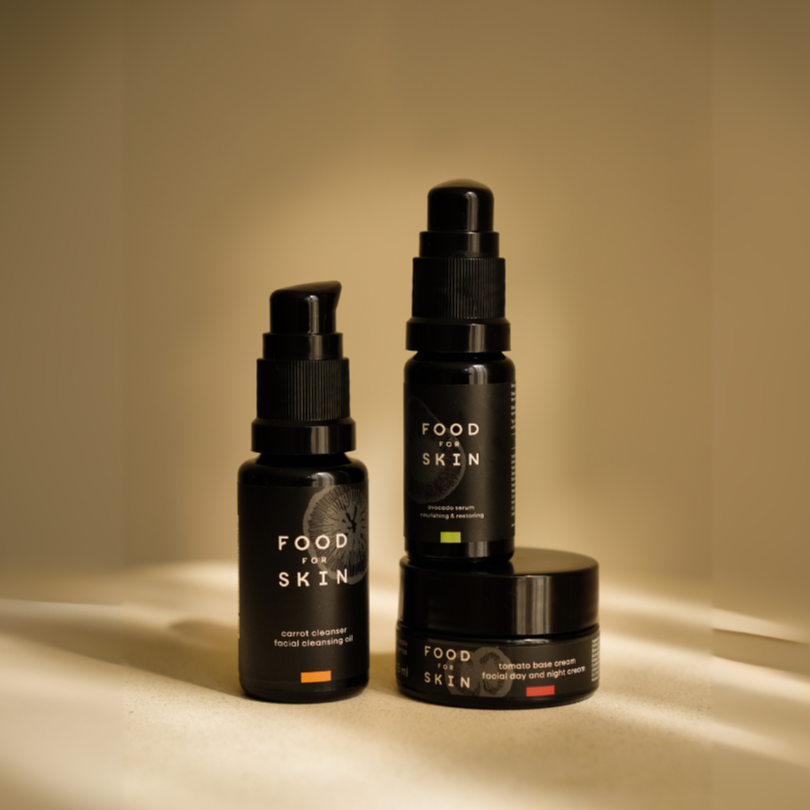
The best natural facial care per skin type?
2026-04-02 Angela Ursem
Most people are fine with an effective, consistent basic routine. Unless you have really specific skin problems - in which case always consult a doctor or dermatologist - it's often better to use a few high-quality products than 12 steps that often disrupt more than they help. We believe more in strengthening the skin barrier, rather than trying to solve one specific problem. Because if the foundation is strong, a lot of problems disappear too.
Many people search for natural facial care by skin type. That's understandable. We want to know: what skin type do I have, and which products go with it? Although how your skin is built is partly genetic, it's more useful to look at your skin condition. It's not that fixed after all
On this page we help you choose and understand. So that you don't just put a label on your skin, but learn what your skin needs right now. Also read first: What is natural skincare.
What is meant by skin type?
Research shows that there are differences between skin types. How much sebum your skin produces, how strong your skin barrier is, and how quickly your skin reacts to irritants or inflammation, measurably differs from person to person. Those differences are partly genetically determined, but also change under the influence of age, hormones, climate, medication, and the way you care for your skin.
A number of basic types have been defined. These are mainly based on sebum production and hydration:
- Oily skin: produces more sebum than average and often has visibly larger pores.
- Dry skin: produces less sebum, feels tight more quickly, and can flake.
- Combination skin: more sebum in the T-zone and drier or normal cheeks.
- Normal skin: relatively stable sebum production and a well-functioning skin barrier.
Why skin condition matters more than a fixed skin type
Your skin isn't a fixed given. What feels dry today can suddenly be oilier next month. Seasons, hormones, stress, and lifestyle continuously affect how your skin behaves. Cold air, sun, lack of sleep, or diet: everything has an effect on your skin.
That's why the idea of one fixed skin type is too simple. It says little about what your skin needs right now.
That's why we prefer to talk about skin condition. How does your skin feel now? Out of balance, sensitive, unsettled, or actually strong and hydrated? That moment determines what works.
Which skin types exist and how do you recognize them?
Start by really looking at, feeling, and listening to your skin. How does your skin react after cleansing? Where do you see shine, and where tightness? Those kinds of signals say more than a label of a supposed skin type.
The most common skin types are dry, sensitive, oily or blemish-prone, and combination. In practice these often overlap. A skin can be both sensitive and dry, or oily and dehydrated at the same time.
Dry skin
Often feels tight and can look flaky. Lacks lipids and sometimes also moisture. Needs nourishment, repair, and protection so that moisture stays in the skin.
Sensitive skin
Reacts quickly to irritants. Think of redness, a burning feeling, or itching. Needs rest, mild formulas, and as little disruption as possible.
Oily or blemish-prone skin
Produces more sebum, which causes shine and clogged pores. Think of blackheads or pimples. Needs balance without drying out.
Combination skin
Different zones with different needs. Often an oilier T-zone and drier cheeks. Requires targeted care per area.
Natural facial care per skin type explained
A lot of skincare is presented as if every skin type has one fixed solution: dry needs rich, oily needs light, sensitive needs soothing. That sounds logical, but your skin isn't a static label. It changes continuously under the influence of seasons, hormones, and lifestyle. That's why it's more useful not just to look at your skin type, but especially at your skin condition at that moment.
Natural facial care for dry skin
Dry skin needs nourishment and moisture retention. Think of ingredients that strengthen the skin barrier and limit dehydration, such as plant-based oils, butters, and hydrating extracts. Natural lipids suit your skin better than aggressive degreasers. What often goes wrong: cleansing too harshly, or focusing only on 'hydration' without adding fats. Water evaporates, nourishment stays.
Natural facial care for sensitive skin
Here it's all about rest. Low irritant load, no excess of aggressive active substances, but gentle, supportive ingredients that help the skin recover. The less noise, the better your skin can respond.
Natural skincare for oily or blemish-prone skin
Balance beats drying out. Oily skin often produces even more sebum as a reaction to aggressive products. Natural care focuses on regulating rather than stripping. Light oils and soothing extracts help bring the skin back into balance. Being too harsh backfires.
How do you recognize what your skin needs right now?
The question "what skin type do I have?" has no fixed answer. Your skin is a snapshot. Look at signals: tightness, shine, redness, unsettledness, flaking. How does your skin feel after cleansing? How does it react to products? Observe and adjust to what your skin needs.
Which natural ingredients suit your skin?
Not every ingredient is good or bad, it's a fit or less of a fit. Look at function: does it hydrate, nourish, soothe, or regulate sebum? By understanding ingredients instead of following trends, you make choices that match your skin condition.
Common mistakes in facial care by skin type
Many people see their skin type as fixed, while it continuously changes. Too much is also often tackled at once, so you no longer know what's working. And reactions are quickly misinterpreted: a pimple doesn't automatically mean a product 'isn't working'. Also see: Common mistakes in natural skincare.
Natural facial care by skin condition in short
Simplicity and consistency work better than chasing the 12-step routine. Skin types shift, sometimes by season or even by week. So listen carefully to your skin and adjust your routine accordingly. In general, this applies to almost every skin type or condition: less is more. And we know and recognize it: when your skin is unsettled, you tend to do more. But try doing less instead, and you'll see your skin recover faster.