How to make the gentle transition to natural skin care
2026-01-16 Angela Ursem
Switching to natural skincare can feel like a logical step. A step towards cleaner products with a smaller footprint on the planet. But it can also feel daunting! Perhaps you've already tried something "natural" that didn't work, or you're worried your skin will react if you abandon your trusted products. That's perfectly understandable. Your skin is used to a certain routine, and changes take time to adjust. When switching skincare products, your skin may feel uneasy at first. This doesn't necessarily mean it's not working. Give yourself time to adjust and recover.
We've put together a guide to help you through the process step by step, so you know what to expect and how to make the transition as smooth as possible.
Why your skin can react when switching
It's perfectly normal for your skin to react when switching to new skincare products. Your skin gets used to what you apply daily, and you'll notice changes. Many products influence how your skin behaves: for example, your skin regulates its own sebum production, moisture balance, and protective layer based on your regular routine.
When you switch to natural skincare, your skin's nutrition changes. Your skin needs to "recalibrate" for a while. During this process, you may experience purging. Purging is a cleansing reaction of the skin. We often see this in clients who previously used more aggressive, synthetic products. The new active ingredients accelerate skin renewal, causing impurities to surface more quickly. So, it's actually a sign that something is happening! Don't be alarmed by this, this is a natural process and a sign that your skin is getting used to a new way of caring for you.
Important to know: a reaction is not the same as an allergy or irritation. A true allergic reaction usually manifests as a burning sensation, redness, or itching that persists. It can take some time for your skin to adjust to a new product, so be sure to gradually increase your use to see how your skin develops over several days. Be patient, give your skin time to adjust, and don't conclude after a single use that something isn't working.
Withdrawal Reactions: What Happens When You Stop Taking 'Aggressive' Ingredients
If you stop using harsh ingredients in cosmetic products, your skin will have to go through a detox. Your skin has become addicted to the products that have completely taken over its functions. Examples of these ingredients include strong synthetic exfoliating acids, retinoids, or products that constantly stimulate the skin to regenerate faster. These ingredients can be effective, but they can make your skin dependent on cosmetic products.
When you stop using these products, your skin may feel a bit lost. It needs to re-establish its natural processes—such as cell renewal and sebum regulation. This transition period can cause discomfort, such as dryness, breakouts, or tightness. We understand this can sometimes feel contradictory, but it's often a sign that your skin is getting back to work.
Remember that these kinds of reactions are usually temporary. A gentle approach and mild products give your skin the chance to get back to work and become stronger, instead of remaining dependent on your skincare products.
Restoring your skin barrier (and why less is more)
Your skin barrier is the protective outer layer of your skin. This layer retains moisture and protects you from external influences, such as bacteria, pollution, and temperature fluctuations. When this barrier is in balance, your skin feels comfortable and is less reactive.
Too many products, or too many different ones, can disrupt the skin barrier. Combining multiple active ingredients, cleansing too often, or constantly trying new products can irritate your skin. The barrier then doesn't have a chance to recover.
By keeping your routine simple and consistent, you give your skin a break. Fewer steps means less stimulation, which is exactly what you need to help your skin rebuild its protective layer. From this foundation, natural skincare can work better. Our step-by-step plan explains how.
Switch to natural skincare in 3 steps
Switching to natural skincare isn't a long and difficult process; it actually helps you slow down and become more aware of what your skin truly needs. By working step by step, you'll reduce the risk of anxiety and learn to listen more to your skin. Don't view this step-by-step plan as a strict rule, but as a guideline you can adapt to your skin and your pace.
Step 1: Simplify your routine
One of the most important (and often underestimated) steps is using fewer products. The more products you use, the more stimuli your skin has to process. By simplifying your routine, you create calm and clarity. You'll see more quickly how your skin reacts and give it space to recover.
During this phase, you can temporarily eliminate products that are primarily "extras": multiple serums on top of each other, exfoliating steps, masks, or products you use primarily out of habit. Stick to the basics: cleansing and protecting , and of course, using natural products. This prevents your skin from having to simultaneously adjust to new products and recover from old stimuli. Read about common mistakes in natural skincare ; you'll likely recognize some situations you'd rather avoid.
Step 2 – Observe your skin
When you simplify your routine, it's important to give your skin some time to recover. Your skin renews itself every 3-4 weeks, so only after this period will you see real results.
During the transition period, your skin is in the process of detoxing, and some reactions will occur. As long as your skin doesn't feel burning, painful, or noticeably irritated, it's often wise to keep it as it is and give it a chance to recover. So don't intervene yet, but observe. Is it drier, oilier, or redder?
After 3-4 weeks you can use nice natural products to support and strengthen your skin, but before that time you should just leave it alone for a while.
Step 3: Build new products slowly
Once your skin feels calmer and you better understand the signals it's giving you, you can gradually introduce new products. Timing is crucial!
Switch products individually or switch to a single routine from a single brand. These products are often better suited to each other. Study your skin carefully and determine what it needs. Don't be persuaded by every new advertisement; ask yourself if it's really necessary before starting a new product. The goal is to support your skin, not make it dependent on it.
When you switch to natural skincare, don't expect visible results on day two. Your skin might react a bit unsettled in the first few weeks, but this usually stabilization phase follows. Knowing what to expect will help you avoid stopping too soon or making unnecessary adjustments.
What can you expect in the first weeks after switching?
Your skin renews itself every 3-4 weeks, so it's important to try a new routine for about a month. You'll see the best results after 3-4 weeks. Our trial kits are sufficient for this period.
Week 1: restlessness, dryness or minor irregularities
Skin often reacts most noticeably in the first week. Common signs include dryness, tightness, some redness, blemishes, and the sudden appearance of pimples. It can be a bit of a shock, but these reactions are temporary and not just a matter of getting used to a new routine.
Don't see the reactions as a reason to stop. As long as your skin doesn't burn, itch intensely, or become increasingly red, it's often better to keep it at bay for a while. Rest and consistency will help your skin more than constantly interfering.
Week 2–3: stabilization and recovery
After 2-3 weeks, many people notice less variation in their reactions. Their skin feels calmer—feelings of tightness and blemishes gradually disappear. In this phase, people sometimes notice small improvements, such as an even skin texture or less need for reapplication. These may be subtle signs, but they indicate that the skin barrier is recovering and starting to function more effectively.
After 3–4 weeks: skin in balance
After 3-4 weeks, people often find their skin is more balanced. It feels more comfortable, reacts less aggressively to external influences, and requires less product. Of course, this doesn't mean your skin is completely balanced, but it does mean a stable foundation has been created.
The process naturally varies from person to person, and there's no guarantee that it will be exactly the same for everyone, but it's a clear trend with a gentle routine. This is the goal of simplifying: skin that can better support itself with less dependence on constantly changing products.
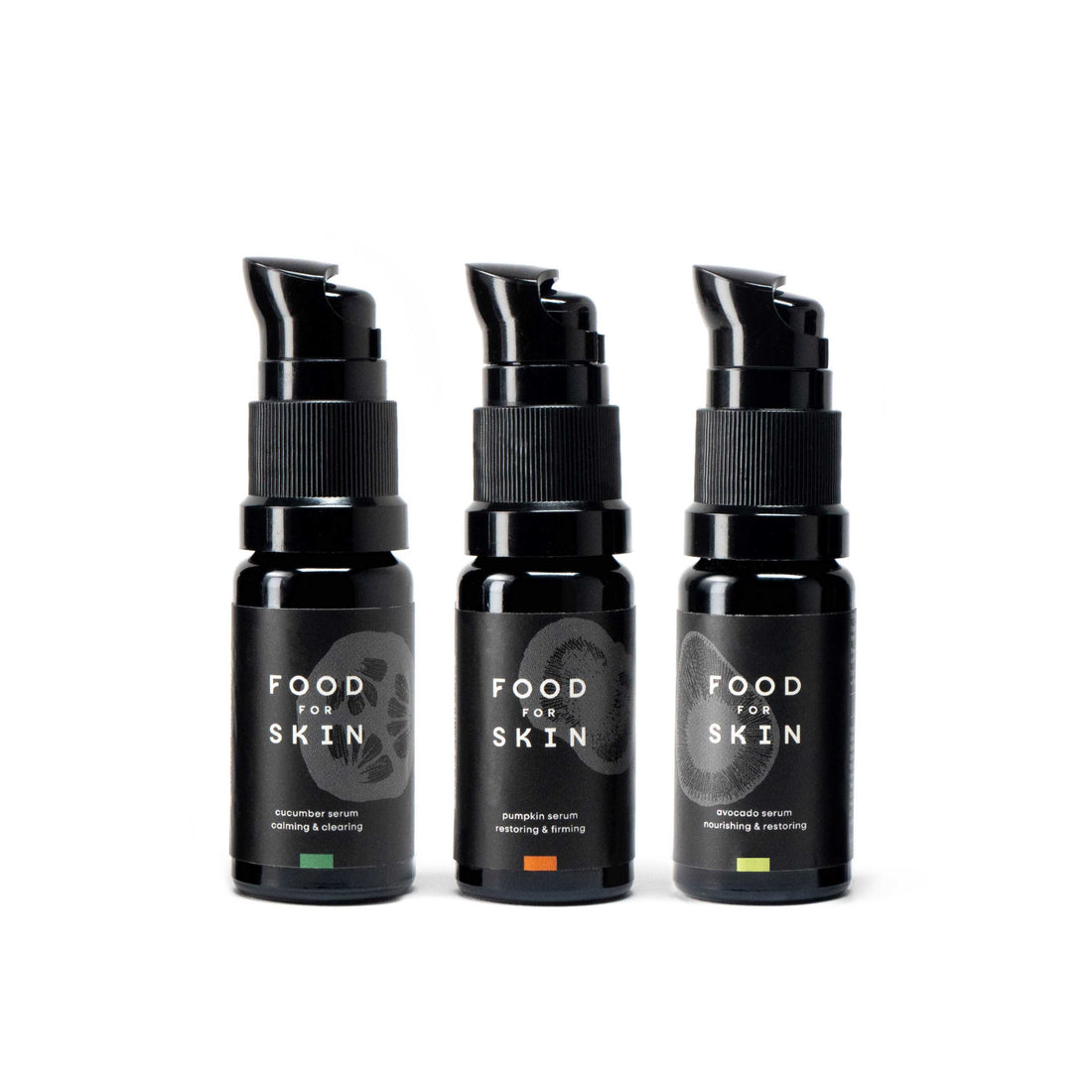
Start with a Food for Skin trial set
Switching in brief
Wondering if natural skincare is right for you? This short Q&A outlines the key points and helps you set realistic expectations.